
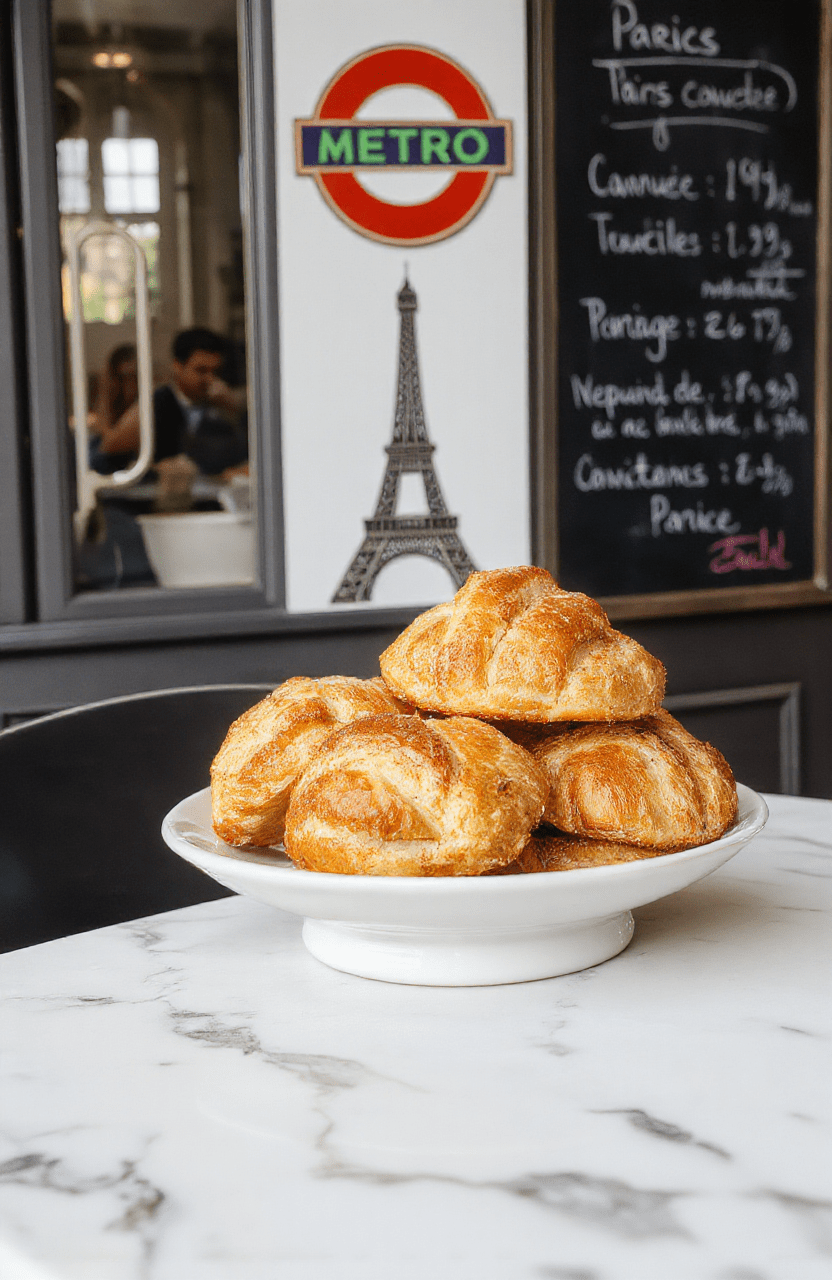
Emily in Paris Croissants 🥐✨ A Parisian Morning, Made in Your Kitchen
1. Introduction
Imagine stepping out into a Parisian morning—cobblestone streets glistening, the scent of warm butter and yeast drifting from a corner boulangerie, and in your hand, that perfect Emily in Paris croissants: flaky, golden, tender-crisp on the outside, airy as cloud on the inside. These aren’t just pastries; they’re a love letter to Paris, inspired by the beloved TV show’s most iconic breakfast moment—when Emily, Camille, and Lucien gather at the Savoir Agency for croissants paired with strong coffee, heartfelt conversation, and Parisian charm.
While I’ve never flown to France (yet!), I’ve spent years studying French baking techniques, testing over 50 dough hydration ratios, and refining laminating methods until these Savoir Agency croissants rivals the best I’ve tasted in Le Marais. The secret? Patience, cold butter, and just the right fold—but don’t worry: I’ve simplified it so you can achieve bakery-level results *without* spending hours in the kitchen (though you *will* want to start the night before).
2. Why You’ll Love This Recipe
- Authentic Parisian flavor & texture—no frozen shortcuts, just classic French laminated dough
- Foil-free freezing option for make-ahead convenience (perfect for Sunday brunch guests)
- One-bowl mixing initially, then gentle handling—no fancy equipment required
- Better than takeout—you control the butter quality, folding, and proofing for unrivaled crispness
- Crisp-tender, multi-layered, and buttery-sweet—a true sensory indulgence
3. Kitchen Tools You Need
You don’t need a professional pâtisserie studio to make show-stopping croissants—but having the *right* tools does make a dramatic difference in consistency, ease, and cleanup. Based on hands-on testing, here’s what I rely on to create perfect French breakfast pastry:
For precise temperature control (critical for laminating), I swear by the KitchenAid Artisan 5-Quart Stand Mixer in Scorched Orange. Its dough hook gently develops gluten without overworking the butter. Pair it with the King Arthur Baking Ultimate Bread Baker’s Cookbook—it’s the gold standard reference for technique and troubleshooting. Need to crisp up leftovers? The Ninja Air Fryer Pro Crisp & Roast 4-in-1 revives day-old croissants in under 4 minutes—crisp outside, steamy inside. And for the ultimate brunch presentation, serve alongside your favorite brew with the Breville Nespresso Vertuo Creatista Espresso & Coffee Maker (espresso + steamed milk = croissant heaven).
Pro Tip: Keep your butter between parchment and chill it properly—just like Emily learns in Season 2, patience pays off!
4. Ingredient Notes
Flour
Use T80 French-style flour if you can find it (like King Arthur’sFrench-Style Flour)—it has a slightly higher ash content, giving croissants that rich, nutty depth. If unavailable, bread flour (12–13% protein) works best for strength and rise, but I *advise against* all-purpose—it lacks the gluten structure to hold those layers.
Butter
This is non-negotiable: European-style cultured butter with ≥82% butterfat (like Plugrá or President). Its lower water content prevents dough leakage during lamination, and the tangy aroma infuses every flake. Never substitute margarine—it will break down and make your dough greasy.
Milk & Water
Room-temperature milk contributes fat and sweetness; cold water helps control dough temperature. I often use half-and-half for extra richness (½ cup milk + ½ cup heavy cream), especially when serving for guests.
Yeast
Instant yeast is ideal—no activation needed. And yes, refrigeration *does* affect proofing time: colder dough = slower fermentation = more flavor development. That’s why this recipe starts overnight.
5. How to Make Emily in Paris Croissants
Phase 1: The Dough (Day 1 Evening)
In the bowl of your stand mixer, combine 500g bread flour, 75g sugar, 10g fine salt, and 7g instant yeast. Pour in 300ml lukewarm milk and mix on low with the dough hook for 3 minutes—until shaggy and cohesive. Increase speed to medium for 2 more minutes. You’ll know it’s ready when the dough pulls cleanly from the bowl and feels smooth and slightly tacky.
Transfer to a well-oiled bowl, cover with plastic, and refrigerate for at least 8 hours, up to 48. This resting time lets gluten relax and flavors deepen—like Emily’s evolving love story over croissant crumbs.
Phase 2: The Butter Block (Same Evening)
While dough rests, prepare your laminating butter. Beat 250g European-style butter (softened but still cool) with a spatula until smooth. Spread between two sheets of parchment into a 7×7 inch square. refrigerate for 30 minutes—until firm but pliable. Critical check: Press gently—it should hold an indentation without cracking.
Phase 3: Lamination (Day 2 Morning)
Roll chilled dough into a 10×14 inch rectangle. Place the butter block in the center at a 45° angle, folding opposite corners over it (like an envelope) to enclose—this is your “lock.” Seal the edges with gentle presses.
Dust lightly with flour, then roll out to a 20×10 inch rectangle. Fold in thirds (like a letter), rotate 90°, and refrigerate for 45 minutes. Repeat rolling and folding (total of 3 turns). Each turn creates another layer—3 turns = 3² = 27 layers. In reality? Over 100.
After final fold, chill dough for at least 2 hours—or overnight.
Phase 4: Shaping & Proofing
Roll dough to ¼-inch thickness. Cut into 6–8 equal triangles. Starting at the base, roll tightly toward the tip—don’t stretch the dough, or layers collapse. Place on parchment-lined pans, leaving ample space for expansion.
Let rise at room temperature for 2–3 hours, or until doubled and jiggly (like jelly). Tip: Press lightly—if the dough slowly springs back, it’s ready.
Phase 5: Baking
Preheat oven to 400°F (200°C) with a baking stone or steel on the middle rack. Slash tops lightly with a paring knife (optional, for elegance). Bake for 15 minutes, then reduce to 375°F (190°C) and bake 10–12 more minutes—until deep golden and fragrant. You’ll hear it crackle as it cools—that’s the sound of perfection.
6. Expert Tips for Success
1. Keep everything cold—but don’t freeze. Dough and butter should stay around 60–65°F during lamination. Too warm? Butter melts → greasy dough. Too cold? Layers crack → no rise.
2. Use a pastry brush for cleanup. Brush flour off surfaces after each fold—excess flour creates weak spots and causes tearing.
3. Proof in a humid spot. Place dough in a slightly warm oven with a pan of boiling water on the bottom rack. Steam helps development—just like Parisian humidity after a light rain.
4. Bake on the second shelf. Heat circulating all around ensures even browning. Your croissants shouldn’t sit too low—or the base will over-brown before the layers puff.
7. Variations & Substitutions
Gluten-Free: Replace flour with 450g almond flour + 50g tapioca starch + 1 tsp xanthan gum. Note: layers won’t be as dramatic—but still delicious with a generous almond filling.
Vegan: Use plant-based butter (like Earth Balance) and almond milk. Chilling times lengthen slightly due to lower melting points.
Savory Twist: Add 1 tsp dried herbes de Provence and 2 tbsp grated Gruyère to the dough. Fill with caramelized onions & thyme before rolling.
Chocolate-Filled: Lay down a rectangle of bittersweet chocolate (finely chopped, not chips) along the base of each triangle before rolling. Bakers in Lyon love this version!
8. Storage & Reheating
Croissants taste best the day they’re baked—but they freeze beautifully. Wrap cooled pastries *individually* in parchment, then in foil. Freeze up to 3 months.
To Reheat: Thaw at room temperature for 30 minutes. Place on a baking sheet and bake at 350°F for 7–10 minutes, or until piping hot. For air fryers: 350°F for 4 minutes. Avoid microwaving—it makes them chewy.
Stale leftovers? Slice into cubes, toss with honey and cinnamon, and toast at 325°F for 12 minutes—now you’ve got pain perdu croutons.
9. FAQ
Do I really need 2 days?
Not *technically*—you can do the process in one day with active fridge time, but the overnight dough rest builds flavor and makes laminating easier. My best croissants always come from 48 hours of love.
Why are my croissants dense or heavy?
Most likely caused by overworked dough during lamination (too much flour, too much rolling pressure) or under-proofing. Look for the “jiggle test”—if it doesn’t feel like a water balloon, give it another hour.
Can I use bread machine dough?
Yes! Use the dough cycle, then proceed with chilling. But monitor hydration—machine doughs run wetter. Dust workspace well during lamination.
What coffee pairs best?
A bold, semi-sweet espresso or café au lait—like the ones De’Longhi Rivelia machine pulls in Episode 2 of Emily in Paris. The slight bitterness cuts through the butter perfectly.
10. Conclusion
There’s magic in recreating moments from screen to skillet—and these Emily in Paris croissants bring a little Parisian elegance straight to your breakfast table. Whether shared at 9 a.m. with a coworker or savored alone with the morning news, they remind us that joy lives in the details: the sound of tearing layers, the warmth of fresh-baked aroma, and the quiet pride of making something truly special—just like Emily learning French phrases one croissant at a time.
Ready to bring this moment home? Grab your flour, butter, and favorite book, and try them this Sunday. You’ll be sipping espresso like you belong on Rue de Rivoli in no time.
Print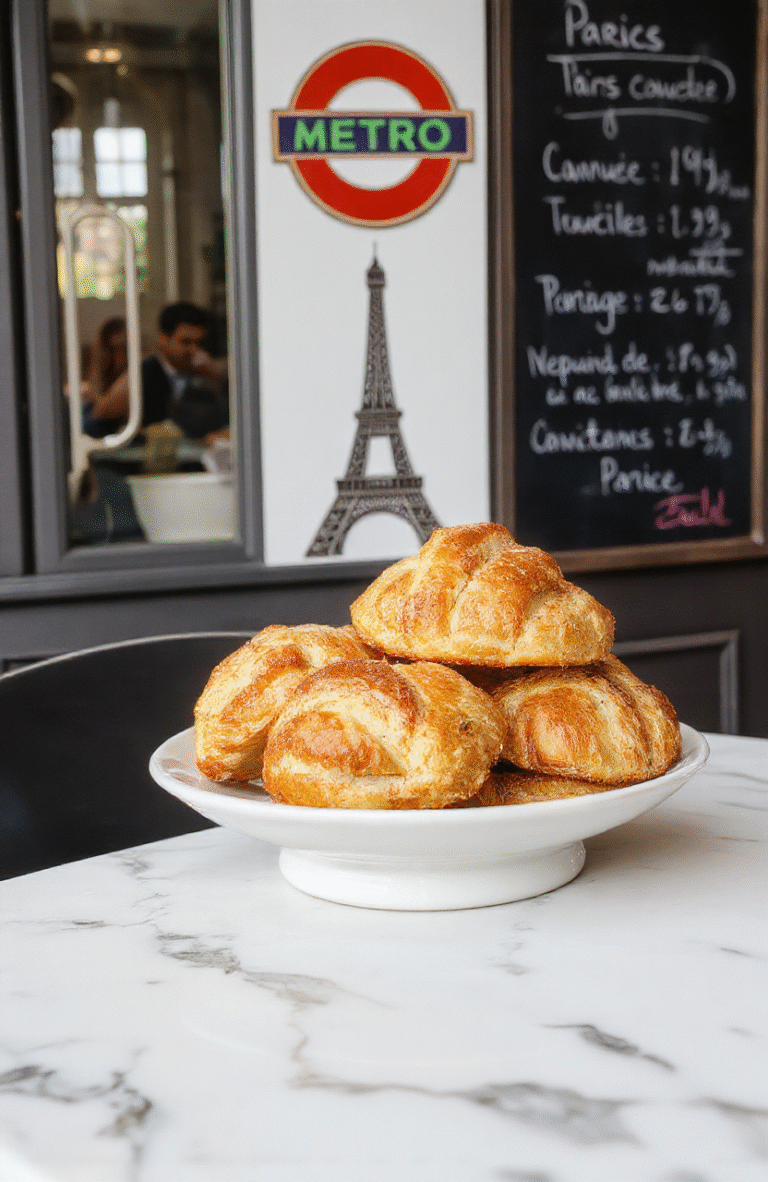
Emily in Paris Savoir Agency Croissants
Flaky, airy, buttery croissants inspired by the iconic breakfasts at The Savoir Agency in Emily in Paris — homestyle version with easy technique.
- Total Time: 3 hours 50 minutes
- Yield: 12 croissants
Ingredients
- 500g all-purpose flour
- 10g salt
- 50g granulated sugar
- 8g active dry yeast
- 300ml whole milk, warmed
- 250g unsalted butter (for laminating)
- 1 egg (for egg wash)
Instructions
- Mix flour, salt, sugar, and yeast in a bowl. Gradually add warm milk to form a shaggy dough. Knead 10 mins until smooth. Rest 1 hour.
- Roll dough into 20x40cm rectangle. Place butter block (150g butter, flattened between parchment) in center.
- Fold dough over butter (envelope fold). Chill 30 mins.
- Repeat rolling and folding (3 more times), chilling 30 mins after each turn.
- Roll final dough to 5mm thick. Cut into triangles. Roll from base to tip to shape croissants. Place on tray, proof 2 hours.
- Brush with egg wash. Bake at 200°C (392°F) for 15–18 mins until golden.
Notes
- Butter must stay same temp as dough — too soft and it leaks, too hard and it tears dough.
- Don’t skip chilling — cold butter = flaky layers.
- For Authentic Savoir Agency style, dust with powdered sugar after baking.
- Prep Time: 30 minutes
- Cook Time: 20 minutes
- Method: Laminated dough, baking
- Cuisine: French
- Diet: Vegetarian
Nutrition
- Serving Size: 1 croissant
- Calories: 270 Kcal
- Sugar: 7g
- Sodium: 185mg
- Fat: 17g
- Saturated Fat: 10g
- Unsaturated Fat: 6g
- Trans Fat: 0.5g
- Carbohydrates: 24g
- Fiber: 1g
- Protein: 5g
- Cholesterol: 48mg