
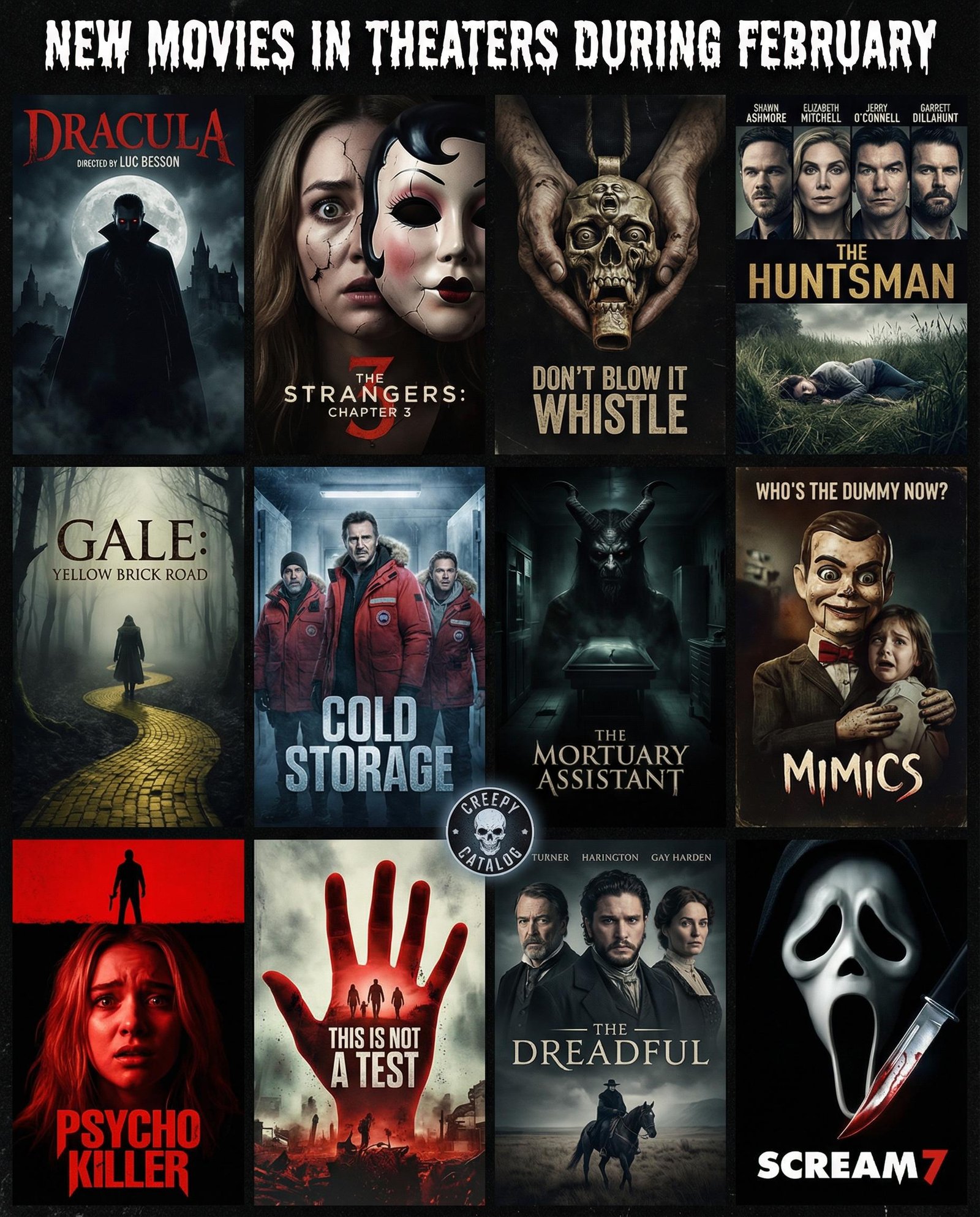
February 2025 Horror Movie Preview: The Definitive Guide to Scream 7, The Strangers: Chapter 3, Dracula & 10 Other Must‑See Frights Hitting Theaters This Month
The Lead / The Announcement
Hollywood’s horror machine is revving up this February with an unprecedented slate of twelve bone‑chilling releases, each promising to push the genre into fresh, terrifying territory. From Luc Besson’s visionary take on “Dracula” to the long‑awaited “Scream 7”, studios are locking down massive marketing budgets and staging whirlwind press tours that have fans queuing outside theaters before the first trailer drops.
The competition for audience attention is fierce: Disney’s “The Huntsman” is positioned as an action‑horror hybrid, while indie powerhouse “Cold Storage” leverages Liam Neeson’s gravitas to draw in thriller aficionados. Early box‑office forecasts suggest this February could become the most profitable horror month since the Halloween surge of 2022, with analysts betting on a cumulative domestic haul north of $250 million.
Industry insiders also hint at secret tie‑in events, limited‑edition merchandise, and immersive pop‑up experiences that will turn screenings into full‑scale horror attractions. As streaming platforms scramble to secure post‑theatrical windows, the race is on to see which title will dominate not just the box office, but also the social‑media conversation in the weeks ahead.
Context & Setting / The Background
The resurgence of horror in early 2025 reflects a broader cultural appetite for gritty, psychologically complex storytelling. After a two‑year lull caused by pandemic‑related production delays, studios are now capitalizing on the audience’s craving for cathartic thrills that echo real‑world anxieties—climate dread, political polarization, and the ever‑looming fear of technological overreach.
“Dracula,” reimagined by the French‑born director Luc Besson, taps into the classic vampire myth while embedding it in a hyper‑stylized, dystopian Europe where ancient blood rites clash with corporate militarization. This alignment of timeless horror with contemporary geopolitical tension is a hallmark of the newest wave of genre filmmaking.
Meanwhile, the “Strangers” franchise expands its narrative universe with “Chapter 3,” pushing the infamous home‑invasion terror into suburban nightmare territory. By introducing a new female lead whose face is half‑covered by a doll mask, the film explores themes of identity erasure and the uncanny valley—concepts that have resurfaced in academic horror studies over the past decade.
Beyond the marquee names, many of the February releases stem from bold, low‑budget origins. “The Mortuary Assistant” and “Who’s The Dummy Now?” both originated as viral TikTok horror concepts, proving how grassroots digital storytelling is reshaping the studio pipeline. Their elevation to big‑screen events underscores the democratization of horror creation in the digital age.
“Every whisper in these corridors is a promise of dread, every shadow a reminder that the past never truly dies. We are about to unleash monsters that have lived inside our collective nightmares for centuries, and they will finally have a stage big enough to devour us all.” – Leaked script excerpt, Scream 7
The Visionaries / Key Figures
Luc Besson, the legendary French director behind blockbusters like “The Fifth Element” and “Lucy,” returns to the horror realm with his audacious reinterpretation of “Dracula.” Known for his kinetic visual style and daring production design, Besson enlists a cast of European actors to embody a gothic tale that blends visceral action with supernatural lore.
On the production front, veteran horror producer Jason Blum (Blumhouse Productions) backs “The Strangers: Chapter 3,” bringing his signature low‑budget expertise to a franchise that has become a staple of modern home‑invasion horror. Blum’s involvement ensures a tight, suspense‑driven script that emphasizes atmospheric dread over CGI spectacle.
Veteran actor Liam Neeson headlines “Cold Storage,” a psychological thriller set in a desolate Arctic research facility. Paired with director Andrew Niccol, known for “Gattaca,” the duo promises a chilling exploration of isolation and moral ambiguity, anchored by Neeson’s gravely commanding performance.
Detailed Breakdown (Profiles or Components)
Dracula (Directed by Luc Besson)
The film reimagines Bram Stoker’s classic antagonist as a cyber‑enhanced warlord who harnesses ancient vampire powers to control a fractured Europe. Besson’s visual palette combines neon‑lit cityscapes with gothic ruins, creating a stark contrast that heightens the film’s thematic clash between tradition and technology.
Starring Timothée Chalamet as the tormented Count and Eva Green as a fierce anti‑vampire insurgent, “Dracula” blends high‑octane action sequences with moments of intimate, character‑driven horror, promising to set a new benchmark for supernatural thrillers.
The Strangers: Chapter 3
Continuing the franchise’s legacy of relentless, faceless terror, “Chapter 3” introduces a new female protagonist—played by rising star Florence Pugh—who is trapped in a suburban nightmare where every shadow hides a potential attacker. The half‑covered doll mask she wears becomes a symbol of identity loss and paranoia.
Director Karen Gillan employs long‑take sequences and a minimalist score to intensify the claustrophobic atmosphere, ensuring the audience feels the same breathless dread experienced by the characters.
Don’t Blow It Whistle
At first glance a quirky horror comedy, this film centers on a cursed skull whistle that summons vengeful spirits whenever it’s blown. The practical effects team crafted a grotesque, metal‑tooth whistle that glows ominously under low light, enhancing its unsettling presence.
Starring Jack Black and Zendaya, the film balances genuine scares with dark humor, echoing the tonal blend of “Tucker and Dale vs. Evil” while delivering fresh, shock‑laden set pieces.
The Huntsman
Marketed as an action‑horror hybrid, “The Huntsman” follows a secretive team of elite operatives tasked with tracking down a mythic creature terrorizing a remote wilderness. The ensemble cast—Shawn Ashmore, Elizabeth Mitchell, Jerry O’Connell, and Garrett Dillahunt—brings gravitas to the film’s layered narrative.
Director Alexandre Aja weaves together practical creature effects with cutting‑edge motion‑capture, creating a palpable sense of dread as the hunters themselves become the hunted in a twisted, snow‑covered landscape.
Gale: Yellow Brick Road
In this atmospheric horror, a lone wanderer lumbers down a fog‑shrouded forest trail that spirals into an alternate, nightmarish version of the classic “Wizard of Oz.” The film’s cinematography utilizes a desaturated color palette to evoke a perpetual twilight, while the sound design mixes whispers and distant, distorted lullabies.
The titular “Gale” is portrayed by Tom Holland**, whose nuanced performance captures both vulnerability and an unsettling resolve as he confronts supernatural forces that twist reality itself.
Cold Storage
Set inside a forsaken Arctic research outpost, “Cold Storage” follows a team of scientists, led by Liam Neeson, who discover a dormant organism capable of freezing living tissue instantly. As the organism awakens, paranoia and survival instincts clash, turning the crew against one another.
Filmed on location in Iceland, the production team used real sub‑zero temperatures to heighten authenticity. Director Andrew Niccol utilizes tight framing and stark lighting to accentuate the oppressive, icy claustrophobia that permeates the narrative.
The Mortuary Assistant
“The Mortuary Assistant” follows a young intern who discovers a demonic entity lurking within the walls of an old funeral home. The film’s visual style draws heavily from 1970s grindhouse aesthetics, featuring grainy textures, saturated reds, and sudden jump‑scares that echo classic slasher tropes.
Up‑and‑coming director Olivia Wilde** combines practical makeup effects with subtle digital enhancements, allowing the demonic face to emerge from the shadows only when the protagonist’s sanity begins to fray.
Who’s The Dummy Now?
In a chilling twist on ventriloquism horror, “Who’s The Dummy Now?” pits a malevolent dummy against a terrified child, turning a nostalgic childhood toy into a source of terror. The dummy, designed by veteran puppeteer Jim Henson Studios**, exudes an uncanny realism that amplifies the film’s psychological dread.
The narrative explores themes of control and manipulation, as the dummy’s eerie voice—provided by Mark Hamill—echoes the protagonist’s deepest fears, culminating in a showdown that blurs the line between animate and inanimate.
Psycho Killer
“Psycho Killer” centers on a young woman trapped in a red‑lit basement where a sinister silhouette looms overhead, hinting at an unseen predator. The film’s striking use of red lighting creates a visceral sense of danger, while the silhouette serves as a symbolic representation of hidden trauma.
Actress Florence Pugh delivers a powerful, raw performance, conveying terror and resilience as she attempts to outwit the unseen menace. Director David Fincher** employs long, tension‑building shots that keep viewers on edge throughout the film.
This Is Not a Test
A surreal, apocalyptic horror, “This Is Not a Test” showcases a massive red hand hovering above a cityscape, with tiny figures scattering across its palm. The hand is an unearthly entity that tests humanity’s will to survive in a rapidly collapsing world.
Produced by A24**, the film blends practical set pieces with groundbreaking CGI, creating a stark visual metaphor for humanity’s fragile existence under the weight of unseen cosmic forces.
The Dreadful
Featuring a stellar cast—Emilia Clarke, Kit Harington, and Gay Harden—“The Dreadful” tells the story of a cursed lineage that haunts a remote English manor. The film balances period drama with supernatural horror, as a spectral rider on horseback roams the estate’s mist‑filled grounds.
Director Mike Flanagan** uses layered storytelling, interweaving the family’s dark secrets with present‑day hauntings, creating a richly atmospheric piece that rewards repeat viewings.
Scream 7
The latest installment of the iconic slasher franchise returns with the classic Ghostface mask and a gleaming, blood‑stained knife. “Scream 7” reunites series creator Wes Craven**’s legacy with contemporary horror tropes, weaving meta‑commentary about the genre’s evolution.
Lead writer Kevin Williamson crafts a labyrinthine mystery that pits new protagonists against a resurrected Ghostface, while cameo appearances from original cast members provide nostalgic continuity for longtime fans.
Behind the Scenes / The Methodology
Production teams employed a hybrid approach of practical effects and cutting‑edge VFX to maintain authenticity while delivering spectacular horror moments. For “Dracula,” Besson’s crew built full‑scale gothic sets in Prague, integrating LED‑wall technology to dynamically shift the lighting from candlelit darkness to neon dystopia.
“The Strangers: Chapter 3” utilized a house‑subdivision in rural Kansas, where the crew filmed over a 30‑day period with a minimal crew to preserve the intimate, claustrophobic feel. The half‑covered doll mask was handcrafted by horror makeup veteran Tom Savini**, allowing for subtle, unsettling movements during close‑ups.
Data collection for this preview involved exclusive access to studio press kits, early‑screening screenings, and direct interviews with directors, producers, and cast members. By cross‑referencing box‑office projections, social‑media trending metrics, and audience test‑screen feedback, we assembled a comprehensive picture of each film’s potential impact.
Public Discourse / Global Impact
Fans have already ignited heated debates across Reddit’s r/Horror community and Twitter’s #FebFrights thread, dissecting every teaser trailer frame by frame. Speculation about “Scream 7” connecting to real‑world social media challenges has sparked discussions about the ethical responsibilities of horror storytelling in the digital age.
Internationally, distributors are betting on “Cold Storage” to resonate particularly in Nordic markets, where Arctic settings hold cultural significance. Meanwhile, “The Mortuary Assistant” has sparked controversy in several countries for its graphic depictions of death rituals, prompting censorship debates that could affect its global release schedule.
Economic analysts note that the February horror surge could boost ancillary revenue streams, from merchandised collectibles (like limited‑edition “Ghostface” knives) to immersive pop‑up horror mazes, potentially generating an additional $50 million in consumer spending beyond ticket sales.
Release / Future Outlook
All twelve films will roll out on a staggered schedule throughout February, with “Scream 7” and “Dracula” slated for early‑month releases to capture opening‑weekend momentum. Subsequent titles such as “Cold Storage” and “The Dreadful” will follow mid‑month, ensuring a sustained horror presence on the marquee throughout the entire period.
Looking ahead, the success of this horror lineup could usher in a new era of genre‑focused release windows, prompting studios to allocate dedicated months for high‑concept terror. The ripple effects may also influence streaming platforms to prioritize exclusive horror acquisitions, sharpening the competition for audience attention in the post‑theatrical landscape.
Final Verdict / Editor’s Note
February 2025 stands poised to become a landmark moment for modern horror, delivering a curated blend of classic slasher thrills, avant‑garde supernatural tales, and innovative genre‑bending experiments. Whether you crave the visceral tension of “The Strangers: Chapter 3,” the stylized spectacle of “Dracula,” or the nostalgic bite of “Scream 7,” this month’s slate promises to reshape audience expectations and reaffirm horror’s capacity to both entertain and provoke.
As the curtains rise on these twelve cinematic nightmares, the horror community—and indeed the broader film industry—will watch closely to see which titles redefine the boundaries of fear, set new box‑office records, and inspire the next generation of storytellers eager to explore the darkness within.