
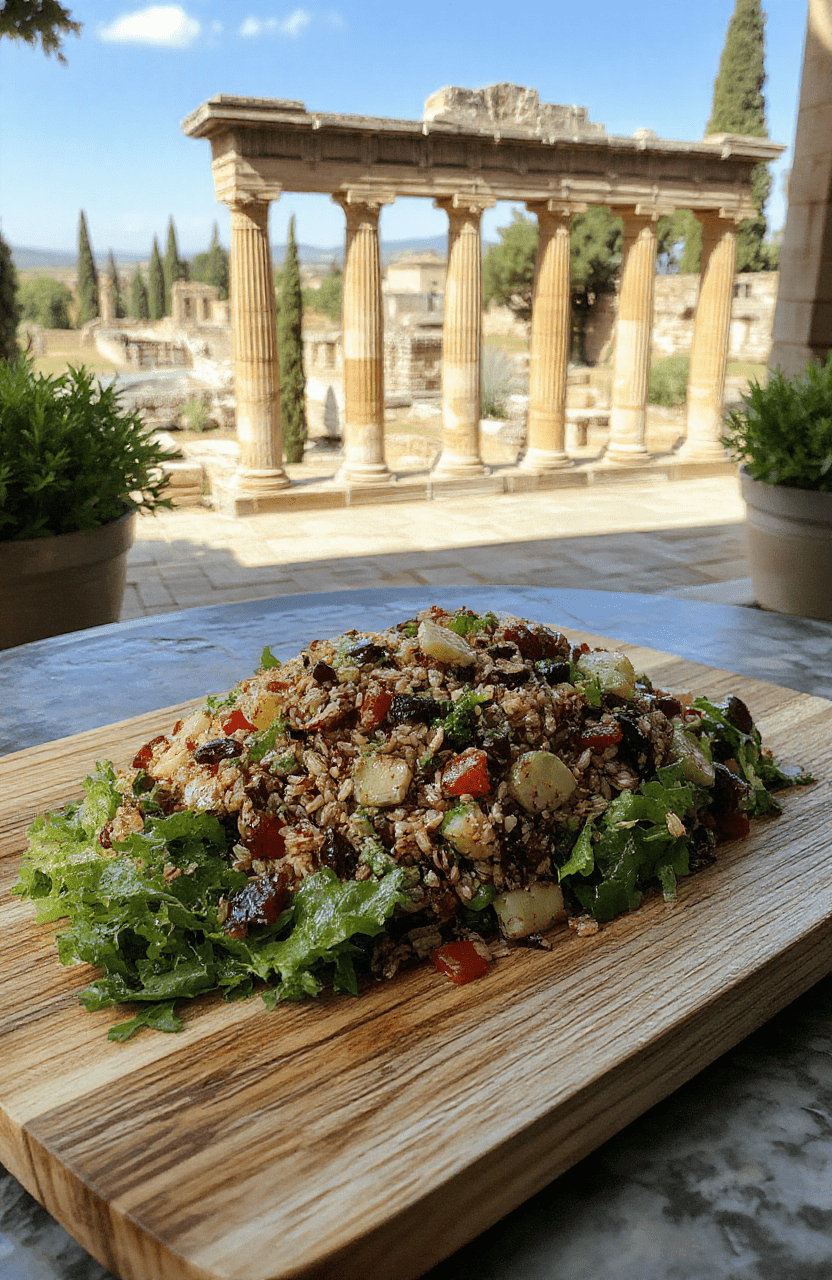
⚔️ Gladiator Maximus’ Ancient Grain Salad: A Roman Empire Power Bowl Worth Trading a Coin For 🏛️
1. Introduction
If you’ve ever wondered what the soldiers of Rome ate before stepping onto the arena’s sand to face lions, barbarians, or just another brutal Tuesday—this gladiator salad is your culinary time machine.
Built on a bed of emmer wheat, barley, and farro—the same ancient grains that fueled the legion’s stamina—this recipe combines hearty nutrition with bold, Sun-soaked Mediterranean flavors. Think toasted almonds for crunch, salty Persian olives for depth, tangy feta for brightness, and a lemon-oregano vinaigrette that tastes like a stroll through the hills of Pompeii.
Ancient, yes. Bland? Never. This isn’t just Roman historian food—it’s a modern-day performance fuel that could carry you through a seven-hour Filmmaker’s Council meeting or a 90-minute gladiatorial bout.
2. Why You’ll Love This Recipe
- ✅ Ready in under 25 minutes (even faster if you use leftover cooked grains)
- ✅ One-bowl prep—no complicated steps or 14 pots on the stove
- ✅ Plant-powered, nutrient-dense, and brimming with fiber, protein, and antioxidants
- ✅ Meal-prep friendly: holds up beautifully in the fridge for up to 5 days
- ✅ Versatile: toss in grilled chicken, chickpeas, or-roasted squash for extra flair
3. Kitchen Tools You Need
You don’t need a full Roman pantry to make this—but having the right tools makes all the difference between “meh” and “Did you just cook like Marcus Aurelius taught you?”
For optimal grain-to-vinaigrette harmony, I rely on the Compact 6-in-1 Digital Air Fryer by Amazon Basics to quickly toast nuts and crisp up roasted vegetables without heating up the kitchen—perfect for those 90+ degree days during August’s Ludi Romani festival.
For the grain cooking itself, my go-to is the T-fal 14-Piece Hard Anodized Nonstick Cookware Set. Why? Because ancient grains like farro can stick and scorch easier than a disgraced senator at the Senate floor—and this set’s even heat distribution means no more burnt bottoms and sad, gluey grains.
And if you’re feeling extra ambitious and want to make your own fresh bread to serve alongside this salad, the Philips 7000 Series Pasta Maker with 8 Shaping Discs is not just for pasta—it’s brilliant for rolling out whole grain sheets for hearty croutons or even flatbreads infused with rosemary and sea salt.
For storage, the JoyJolt Airtight Glass Food Storage Set keeps your finished gladiator salad fresh, vibrant, and ready for your next midday power lunch—no sogginess, no regret.
4. Ingredient Notes
Let’s talk grains. Not the “wheat-free whole grain” blend you found at the checkout lane. Real ancient grains—ones that haven’t been heavily hybridized or stripped of their nutritional soul.
Emmer wheat (also called farro monococco) was a staple in ancient Egypt and Rome. It has a nutty, slightly sweet flavor and chewy texture—perfect for grain bowls.
Einkorn is the oldest cultivated wheat, predating emmer. It’s lower in gluten but higher in lutein (great for eye health!) and has a buttery, rich finish.
Barley adds a pleasant chew and a subtle malty note. Use hulled barley (not pearl) to keep the nutritious bran layer intact—just like the legionaries would’ve had.
The extras matter, too:
– Feta should be sheep’s milk or a sheep-goat blend (like Greek feta). Cow-milk feta sometimes runs too salty and soft; you want something crumbly yet moist.
– Olive oil must be extra-virgin and freshly harvested—your salad is only as good as the oil you drizzle. Look for a harvest date on the bottle, not just an “expiration.”
– Dried oregano from your spice rack? Fine. But wild Greek oregano? It’s like comparing a training dummy to a seasoned centurion. Upgrade if you can.
5. How to Make Gladiator Maximus’ Ancient Grain Salad
Here’s how you build a bowl that would earn you a nod of approval from thelan master himself:
Phase 1: Cook the Ancient Grains (10 minutes active, 25 minutes passive)
In a medium saucepan, combine ½ cup emmer, ¼ cup farro, ¼ cup hulled barley, and 1½ cups cold water. Add a pinch of sea salt. Bring to a boil, reduce to a low simmer, cover, and cook for 20–25 minutes, or until tender but still chewy. Drain any excess water, fluff with a fork, and let cool.
Visual cue: The grains should be puffed and soft around the edges—but each kernel should still hold its shape. Don’t overcook them or they’ll turn gummy in the salad.
Phase 2: Toast the Crunch (5 minutes)
Sprinkle ¼ cup slivered almonds over the dry air fryer basket (or sauté pan over medium heat). Toast at 350°F for 3–4 minutes until golden and aromatic. Shake halfway through. Cool completely before adding.
Sensory tip: You’ll know they’re ready when you smell toasted nuttiness—and you can’t stop yourself from sneaking one.
Phase 3: Prep the Fresh Goods (7 minutes)
Chop 1 English cucumber ( peel optional, diced small), ½ cup cherry tomatoes (halved), ¼ cup red onion (finely minced), and ½ cup Persian cucumber for extra crunch. Add ⅓ cup kalamata olives (pitted & quartered).
Phase 4: Dress & assemble (2 minutes)
In a small jar, shake together: 3 tbsp extra-virgin olive oil, 1+ tbsp fresh lemon juice, 1 tsp Dijon mustard, 1 tsp maple syrup, 1 tsp dried oregano, and a big pinch of flaky sea salt. Taste and adjust acidity/sweetness—this dressing should be vibrant, not overwhelming.
In a large bowl, combine cooled grains, toasted almonds, and chopped veggies. Drizzle in half the dressing, toss, then let rest 5 minutes. Add feta (½ cup crumbled), more dressing if needed, and fresh parsley (2 tbsp, chopped). Toss once more and plate like you’re about to receive the spolia opima.
6. Expert Tips for Success
Now, I won’t sugarcoat it: ancient grains have personalities, and some are more temperamental than a senator in debate.
- Toast the dry grains first. Before adding water, toast emmer, farro, and barley in a dry pan for 2–3 minutes. It deepens flavor and cuts bitterness.
- Cool grains before mixing. Warm grains will wilt your greens and make your salad soggy. Spread them on a baking sheet and chill for 10 minutes, or let sit uncovered until room temp.
- Acid balance is everything. Add lemon juice in stages—start with less, dress, taste, then add more. You want bright, not mouth-puckering.
- Feta first, not last. Crumble it into the warm grains; the residual heat softens it and lets it meld into the salad instead of just sitting on top like a lonely island.
7. Variations & Substitutions
Gluten-sensitive? Swap ancient wheat grains for ¾ cup cooked quinoa + ¼ cup toasted buckwheat groats (kasha). Same chew, same fiber—zero gluten.
Lactose-free? Use a nutritional yeast + lemon zest blend (1 tbsp each) to mimic feta’s umami punch.
Want protein on steroids? Add 1 cup cubed grilled chicken, or ½ cup chickpeas rinsed and roasted in the air fryer with smoked paprika at 400°F for 10 minutes.
Summer twist? Include ½ cup shelled edamame, grilled peaches, or diced mango for sweet heat contrast.
8. Storage & Reheating
This salad actually gets better after 12 hours in the fridge—flavors marry beautifully. Store in JoyJolt airtight containers for up to 5 days.
Note: Add fresh herbs, nuts, and feta *right before serving* if meal-prepping, as they soften over time. When reheating the grain base, stir in a splash of water or broth and microwave 45 seconds—reawaken those grains like a sleeping gladiator.
9. FAQ
Q: Can I make this salad in advance for a Roman-themed dinner party?
A: Absolutely. Prepare grains and dressing up to 3 days ahead. Store separately. Assemble just before serving to preserve texture.
Q: Is farro the same as emmer or einkorn?
A: In the U.S., “farro” often refers to emmer (monococcum), but sometimes to spelt (dicoccum) or einkorn (monococcum). For this recipe, emmer gives the best balance of chew and nuttiness.
Q: My grains turned out mushy. What went wrong?
A: Likely overcooked or not rinsed/drained well. Always drain excess water and spread on a tray to cool—grains keep cooking in their own residual heat. Next time, try 15 minutes instead of 20.
Q: What wine pairs best with this Roman-inspired dish?
A: A crisp, mineral-driven white like Grechetto or Verdicchio from Umbria. Or try a dry Rosso di Toscana—light tannin, bright acidity, and earthy enough to match ancient grains.
10. Conclusion
Yes, Gladiator Maximus might’ve lived on barley cakes and cold water—but you? You’ve got ancient wisdom, modern convenience, and a bowl that’s equal parts historical tribute and nutritional powerhouse.
Take this salad to your next cookout, pack it for a midweek reset, or serve it at a themed dinner—the ancient Romans would’ve approved. And if not? Well… they didn’t have air fryers, either. 😏
And if you love this gladiator salad, you’ll adore the Succession Lobster Roll, the Morticia’s Midnight Rose Garden Cupcakes, or the Gilmore Girls Sookie’s Peach Pie.
Don’t forget to bookmark this page—and if you try the recipe, tag me on Instagram with #GladiatorSaladChallenge. Let’s see those full bowls and full hearts. 🛡️🌾
Print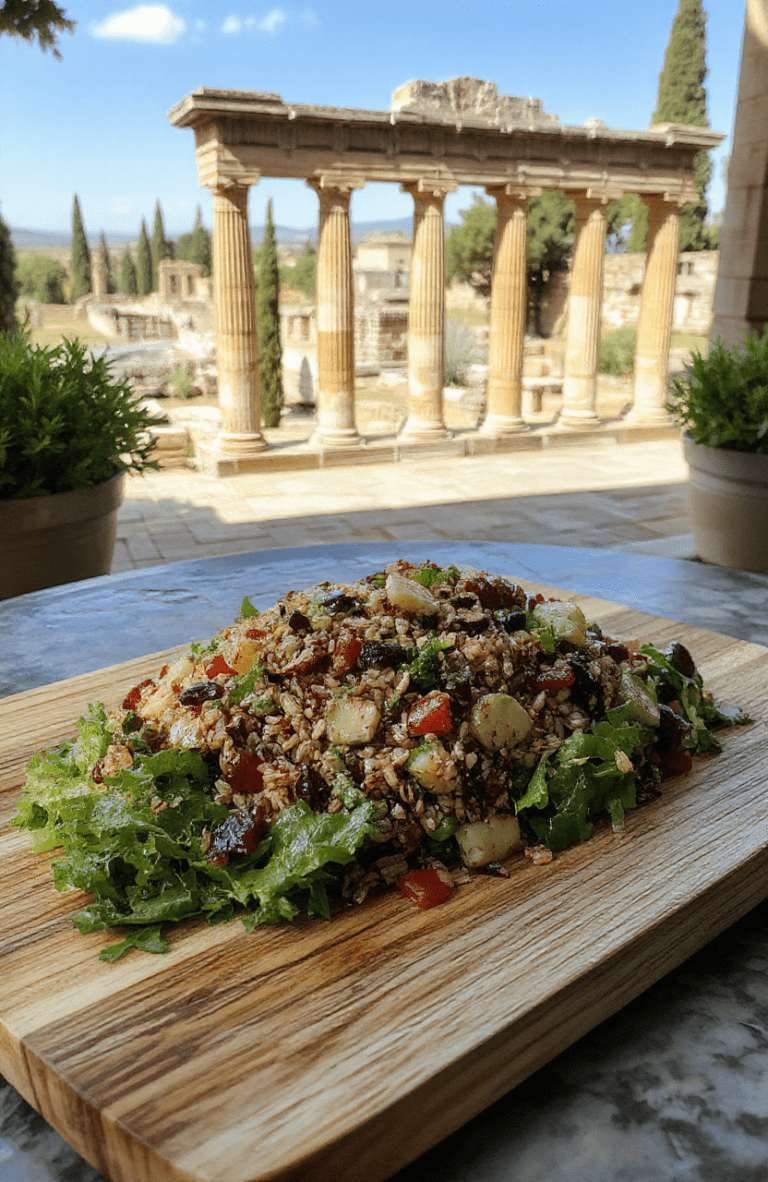
Gladiator Maximus’ Ancient Grain Salad
A hearty, nutritious ancient grain salad inspired by the Roman legions—packed with heritage grains, fresh herbs, and bold Mediterranean flavors.
- Total Time: 50 minutes
- Yield: 6 servings
Ingredients
- 1 cup farro, rinsed
- 1/2 cup freekeh, rinsed
- 1/2 cup spelt berries, rinsed
- 2 cups water or vegetable broth
- 1/4 cup extra-virgin olive oil
- 2 tbsp lemon juice
- 1 tbsp honey or maple syrup
- 1 tsp Dijon mustard
- 1 garlic clove, minced
- 1/2 cup cherry tomatoes, halved
- 1/3 cup cucumber, diced
- 1/4 cup pomegranate arils
- 1/4 cup crumbled feta cheese
- 2 tbsp toasted pine nuts
- 3 tbsp chopped fresh parsley
- 2 tbsp chopped fresh mint
- 1/4 tsp sea salt
- Freshly ground black pepper to taste
Instructions
- In a medium saucepan, combine farro, freekeh, and spelt berries with water or broth. Bring to a boil, then reduce heat, cover, and simmer for 25–30 minutes or until grains are tender but chewy. Drain any excess liquid and let cool.
- In a small bowl, whisk together olive oil, lemon juice, honey (or maple syrup), Dijon mustard, garlic, salt, and pepper.
- In a large bowl, combine cooled grains, tomatoes, cucumber, pomegranate arils, parsley, and mint.
- Drizzle dressing over salad and toss to coat evenly.
- Gently fold in feta and pine nuts just before serving.
Notes
- For a vegan version, omit feta or use a plant-based alternative, and substitute maple syrup for honey.
- Grains can be cooked 1–2 days ahead and stored refrigerated.
- Toast pine nuts in a dry skillet over low heat for 3–5 minutes until golden and fragrant—watch closely to avoid burning.
- Prep Time: 20 minutes
- Cook Time: 30 minutes
- Method: Boiling, dressing whisking, tossing
- Cuisine: Ancient Roman-inspired Mediterranean
- Diet: Vegetarian (vegan option included)
Nutrition
- Serving Size: 1 cup
- Calories: 285 Kcal
- Sugar: 5g
- Sodium: 290mg
- Fat: 12g
- Saturated Fat: 3g
- Unsaturated Fat: 8g
- Trans Fat: 0g
- Carbohydrates: 42g
- Fiber: 7g
- Protein: 9g
- Cholesterol: 12mg