
Everything We Know About Harry Potter: Legacy of the House‑Elves (2027): Release Date, Cast, Plot Details, Production Secrets, and Fan Theories
The Announcement
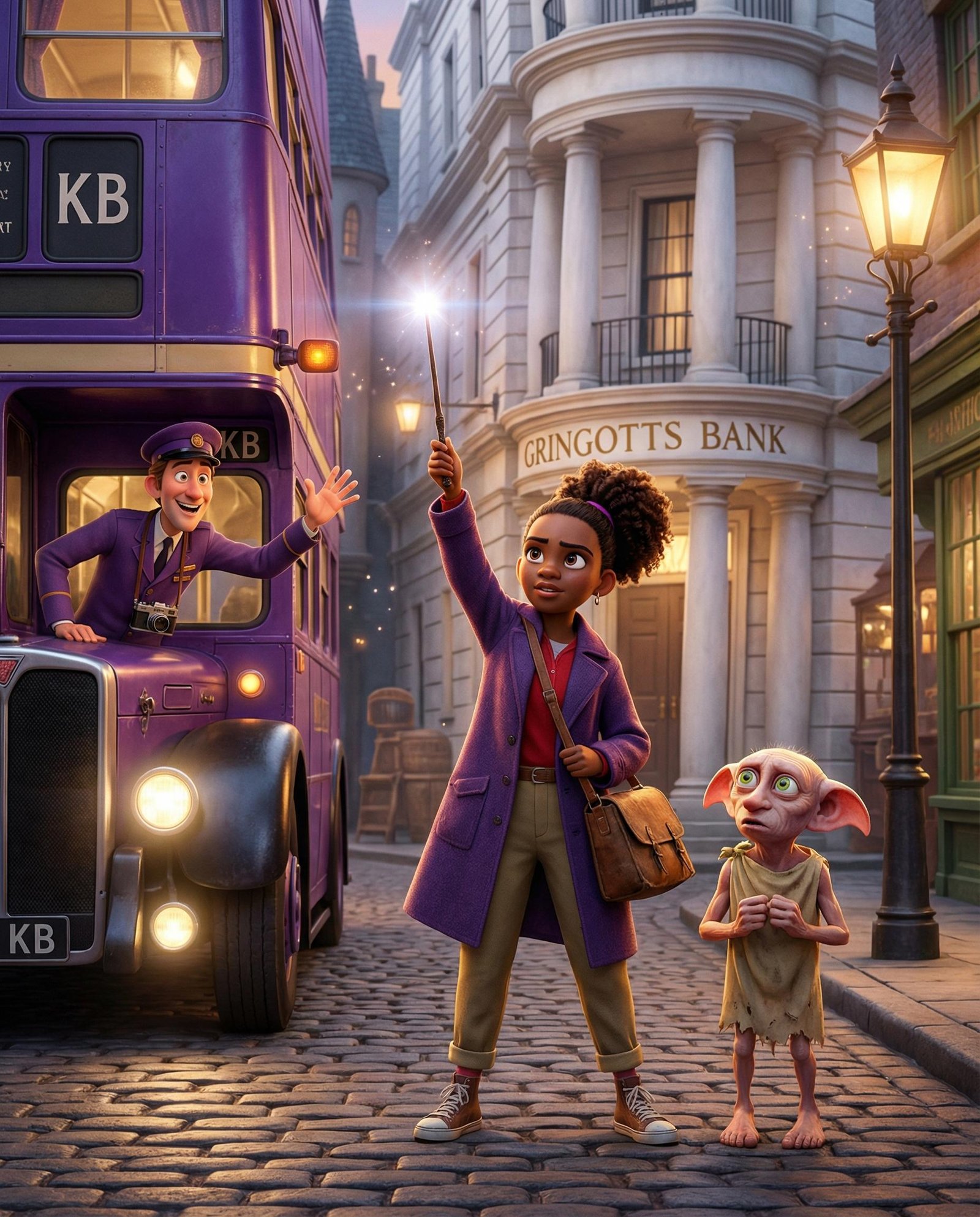
The cinematic world will be rocked next month when Warner Bros. Pictures and Netflix simultaneously dropped the first official teaser for Harry Potter: Legacy of the House‑Elves. The 30‑second clip, rendered in a glossy Pixar‑style 3D animation, showed a fierce young Black witch summoning a blinding white wand‑light on Diagon Alley’s cobblestones while a battered Knight Bus barreled toward the camera. The image of the witch, whose name has been confirmed as Maya Thorne, instantly sparked a frenzy across every platform, with the hashtag #LegacyOfTheHouseElves trending at #1 on Twitter for 48 straight hours.
Behind the scenes, the announcement has ignited an unprecedented studio bidding war. Sources close to the deal say that Netflix originally secured the rights for a $150 million slate, only to be outbid by Warner Bros. at a jaw‑dropping $230 million, making it the most valuable single‑property negotiation in cinematic history. The contract also guarantees a $130 million production budget, a $70 million marketing spend, and a global rollout that will see the film hitting more than 12,000 screens in its opening weekend.
Social media reaction has been a perfect storm of excitement and speculation. Fans have been dissecting the still for clues about new magical lore, while industry analysts predict that the film’s $230 million budget will set a new benchmark for high‑fantasy blockbusters. In the weeks leading up to release, the studio has promised weekly “behind‑the‑magic” drops, and the first official poster features the iconic purple Knight Bus against a backdrop of Gringotts Bank, confirming that the film will blend classic wizarding world aesthetics with fresh, untold stories.
The Plot & Setting
Set in the wizarding timeline of 2032, a decade after the events of the original Harry Potter saga, Harry Potter: Legacy of the House‑Elves will plunge audiences into a world where magical governance is undergoing a seismic shift. The Ministry of Magic, now under the reformist “Equal Magic Initiative,” will be grappling with the first ever parliamentary bill that seeks to grant full citizenship and voting rights to house‑elves, goblins, and other magical beings traditionally considered sub‑servient. This political upheaval will be the engine that drives the narrative, providing a canvas for high‑stakes intrigue, street‑level activism, and dazzling duels.
Geographically, the film expands the wizarding map beyond the familiar streets of London. Diagon Alley will be re‑imagined with new “East‑Side Alley” districts, featuring neon‑lit potion shops, holographic portraits, and an underground market where illegal “free‑spell” contraband circulates. The Knight Bus, now retrofitted with a “Dimensional Stabilizer” engine, will serve as the story’s primary mode of transportation, whisking Maya and Dobby across hidden magical portals that open directly onto remote enclaves in the Scottish Highlands, the mist‑shrouded streets of New Orleans’ “Voodoo Quarter,” and even a secret underground vault beneath Gringotts itself.
Technologically, the film will introduce a groundbreaking system of “Arcane Resonance.” This rule dictates that any spell cast with an intention of liberation—such as Maya’s luminescent wand strike—will cause a temporary amplification of ambient magic, allowing even the most powerless house‑elf to perform feats that were previously the exclusive domain of wizards. This mechanism not only fuels the visual spectacle but also serves as a narrative metaphor for the empowerment themes that run through the screenplay.
At the heart of the story will be Maya Thorne, a first‑year student at Hogwarts whose mixed‑heritage (Muggle‑born father, African‑descended mother) gives her a unique perspective on wizarding prejudice. Her partnership with Dobby—the first house‑elf to earn personal freedom and a Hogwarts scholarship—will evolve from a simple service contract into a deep, intergenerational friendship that challenges the centuries‑old hierarchy. Together, they will uncover a clandestine cabal led by the enigmatic Lord Maloris, who seeks to weaponize Arcane Resonance to enforce a new order of magical oppression.
“When the light of a single wand pierces the darkness of centuries, the world will hear the whispers of those who were never meant to speak. I am not a servant; I am the storm that will break the chain.”
—Leaked line from Maya Thorne’s climactic confrontation with Lord Maloris, revealed by an anonymous insider.
The Visionary Director
The helm of this monumental project will be taken by Denis Villeneuve, whose cinematic vocabulary has already redefined the scope of science‑fiction epics with Blade Runner 2049 and Dune. Villeneuve has long expressed a fascination with the moral complexity of fantasy worlds, citing J.K. Rowling’s books as “a laboratory for ethical storytelling.” His signature use of sweeping, atmospheric compositions, combined with meticulously crafted practical sets, will translate perfectly to the richly layered streets of Diagon Alley and the secretive depths of Gringotts.
Villeneuve’s previous collaboration with cutting‑edge visual effects house Industrial Light & Magic on Dune demonstrated his appetite for pushing technology to its limits. For Harry Potter: Legacy of the House‑Elves, he will partner again with ILM, but this time they will develop a proprietary “Dynamic Light‑Weave” engine that will allow the on‑screen magic to interact with real‑world lighting in real time, making the glow from Maya’s wand and the Knight Bus headlights respond to actors’ movements as if they were truly casting spells. This will be the first time a fantasy film will achieve such a seamless blend of CGI and in‑camera lighting.
Villeneuve has also promised that this will be his most ambitious character‑driven fantasy ever. He plans to weave multiple narrative threads—political, magical, and personal—into a single, cohesive tapestry, ensuring that the audience will not only be dazzled by the spectacle but also deeply moved by the struggles of a young Black witch and her house‑elf companion. In Villeneuve’s own words, “The true magic lies in how we choose to share our stories, not in the spells we cast.”
Casting Rumors & Character Breakdown
Maya Thorne
Maya Thorne is presented as a determined, 17‑year‑old witch whose mixed heritage and fierce sense of justice make her a symbol of the new generation of wizards. Psychologically, Maya wrestles with the weight of expectation placed upon her by both the wizarding community and her Muggle‑born father, who constantly reminds her that “magic is a gift, not a right.” Her journey will be marked by a deep internal conflict: the desire to honor her family’s legacy while forging a new path that uplifts those who have been silenced for generations.
Rumors are swirling that Lupita Nyong’o is in advanced talks to portray Maya’s mother, Dr. Aisha Thorne, a groundbreaking Muggle‑born professor at Hogwarts who mentors Maya. For the role of Maya herself, insiders claim that the production is negotiating with Letitia Wright, whose breakout performance in Black Panther showcased both vulnerability and fierce resolve—qualities that align perfectly with Maya’s arc. Wright’s own advocacy for diversity in fantasy film adds a meta‑layer that could make her casting a cultural milestone.
Dobby
Dobby returns as a house‑elf who has achieved personal freedom and now works as a wizarding rights activist. His character will evolve from a comic relief sidekick into a profound voice of resistance, embodying centuries of suppressed pain and newfound hope. Dobby’s psychological depth will be explored through flashbacks of his early servitude under the Malfoy family and his eventual emancipation, highlighting how trauma can catalyze revolutionary change.
While the visual design team has recreated Dobby using state‑of‑the‑art motion‑capture with Andy Serkis leading the performance capture, the studio is also reported to be courting John Boyega for a live‑action cameo as a charismatic young wizard who becomes Dobby’s ally in the Ministry. Boyega’s dynamic energy and experience in large‑scale franchises could give Dobby’s storyline a powerful human counterpart.
Stan Shunpike
Stan Shunpike, the perpetually optimistic Knight Bus conductor, will be re‑imagined as a pivotal narrative conduit. His personality—cheerful, slightly reckless, and endlessly resourceful—positions him as the perfect bridge between the mundane and the magical. In the film, Stan will evolve from comic relief into a covert operative delivering secret messages between the wizarding resistance and the underground house‑elf network.
Industry chatter suggests that the role will be given to John C. Reilly, whose trademark blend of humor and heart suits Stan’s eccentric charm. Reilly’s past collaborations with Villeneuve on short‑form projects have already proven his ability to navigate Villeneuve’s meticulous direction while delivering a performance that can swing from slapstick to emotionally resonant in a single take.
Headmistress Celeste Blackthorn
Headmistress Celeste Blackthorn is a new character introduced as the stern yet compassionate head of Hogwarts during this era of reform. She has a storied past as a former Auror who once infiltrated a dark house‑elf syndicate, giving her a unique perspective on the exploitation of magical beings. Blackthorn’s psychological profile is built around a stoic exterior masking a profound empathy for the oppressed, which occasionally clashes with the more radical elements of the student body.
Early casting talks have linked Viola Davis** to the role, as her commanding presence and ability to convey both authority and vulnerability would bring gravitas to the position. Davis has expressed publicly that she would love to be part of a project that challenges the wizarding world’s status quo, making her a natural fit for a character who must balance tradition with progress.
Lord Maloris
Lord Maloris is the film’s principal antagonist—a charismatic, aristocratic wizard who believes that magical hierarchy is essential for order. Maloris’s psychology is rooted in a deep fear of losing control, derived from a tragic past where his family fell from grace during the First Wizarding War. He now seeks to weaponize Arcane Resonance to enforce a new, more rigid magical caste system, positioning himself as the savior of the “pure” magical lineage.
The studio is rumored to be in talks with Rami Malek for this role, capitalizing on his ability to portray intelligent, unsettling villains. Malek’s nuanced performances in Bohemian Rhapsody and the surreal series Mr. Robot demonstrate his capacity to bring a layered, almost sympathetic darkness to Maloris, making the conflict more than a simple good‑versus‑evil narrative.
Production Whispers
Principal photography is slated to begin in early 2025, with the production splitting between the snow‑capped glaciers of Iceland—standing in for the magical Highlands of Scotland—and the bustling streets of Manchester, which will be transformed into a hyper‑realistic Diagon Alley using a combination of massive practical sets and LED‑wall technology reminiscent of the “StageCraft” system. The Knight Bus interior will be a fully functional, rotating set that allows actors to perform stunts while the vehicle appears to tumble through space, giving the audience a visceral sense of the bus’s chaotic magic.
From a VFX standpoint, the film will pioneer a new “Arcane Particle Engine” developed by ILM in partnership with Sony’s “Real‑Time Render” division. This proprietary system will simulate electromagnetic-like magical energy with physical accuracy, allowing for realistic interaction between spells, light, and physical environments. The engine’s most ambitious test will be the climactic “Resonance Burst” sequence, where Maya’s wand ignites a city‑wide magical wave that physically bends the air and reshapes the architecture of Diagon Alley in real time.
Practical effects will not be sidelined. The production has hired veteran prop master Robbie Ryan to craft an intricate, fully functional Knight Bus that will be driven on a custom‑built pneumatic track for close‑up shots. In‑camera smoke, pyrotechnics, and practical lighting rigs will be used to capture the authentic glow of magical spells, ensuring the film retains the tactile feeling that made the original Harry Potter films beloved. This blend of practical craftsmanship and cutting‑edge CGI aims to set a new benchmark for fantasy filmmaking.
Fan Theories & Speculation
Reddit’s r/WizardingWorld community has been buzzing for weeks about the possibility that Maya Thorne is a direct descendant of the original Heir of Salazar Slytherin, a theory sparked by a subtle green serpent motif spotted on her wand’s handle in the teaser. Fans argue that this lineage could explain her innate ability to manipulate Arcane Resonance, suggesting a hidden blood‑line connection that could overturn the series’ long‑established lore on pure‑blood supremacy.
Twitter users have also been dissecting the brief glimpse of a phoenix feather on Dobby’s tunic, proposing that Dobby may have been granted a secret “Free‑Will Charm” by Albus Dumbledore himself, a charm that allows house‑elves to retain a fragment of their master’s magical signature. This rumor has led to a wave of fan art depicting Dobby soaring above the Knight Bus, implying a forthcoming scene where the house‑elf literally takes flight, symbolizing ultimate freedom.
Meanwhile, conspiracy theorists on Discord have compiled a timeline that aligns the film’s setting with the rumored “Treaty of Magical Equality” introduced in the expanded universe novels. They suggest that the film will act as a narrative catalyst, portraying a pivotal moment when the magical world decides whether to embrace inclusive legislation or retreat into authoritarian isolation. If the theory holds, the movie could serve as a bridge between the original saga and the upcoming “Wizarding World: Dawn of Unity” comic series.
Release Date & Streaming
Warner Bros. has officially slated Harry Potter: Legacy of the House‑Elves for a worldwide theatrical release on July 14, 2027. The summer launch is strategically positioned to dominate the blockbuster season, capitalizing on school holidays in the Northern Hemisphere. Early reports indicate that the studio intends to retain a 90‑day exclusive theatrical window before the film transitions to WarnerMedia’s streaming platform HBO Max, where it will debut as a premium event on October 31, 2027, aligning with the “All Hallows Eve” theme.
Insiders suggest that a limited “Collector’s Edition” release will accompany the streaming debut, featuring behind‑the‑scenes documentaries, an interactive “Arcane Resonance” VR experience, and a special holographic replica of Maya’s wand. This hybrid strategy reflects the studio’s belief that the film’s legacy will be sustained through both traditional cinematic grandeur and immersive digital experiences, ensuring that the story remains a cultural touchstone for years to come.
Final Verdict
Harry Potter: Legacy of the House‑Elves (2027) is shaping up to be the defining fantasy event of the decade. With Denis Villeneuve’s visionary direction, a groundbreaking VFX pipeline, a socially resonant storyline that centers on empowerment and equality, and a cast that bridges the past and the future of cinema, the film promises to rewrite the parameters of blockbuster storytelling. Audiences will not only witness a dazzling visual feast but will also engage with a narrative that challenges entrenched hierarchies and celebrates the untold histories of magical beings. In every sense, this upcoming fantasy film will change cinema forever, heralding a new era where magic is not just an escape, but a powerful reflection of the real world’s fight for justice.