
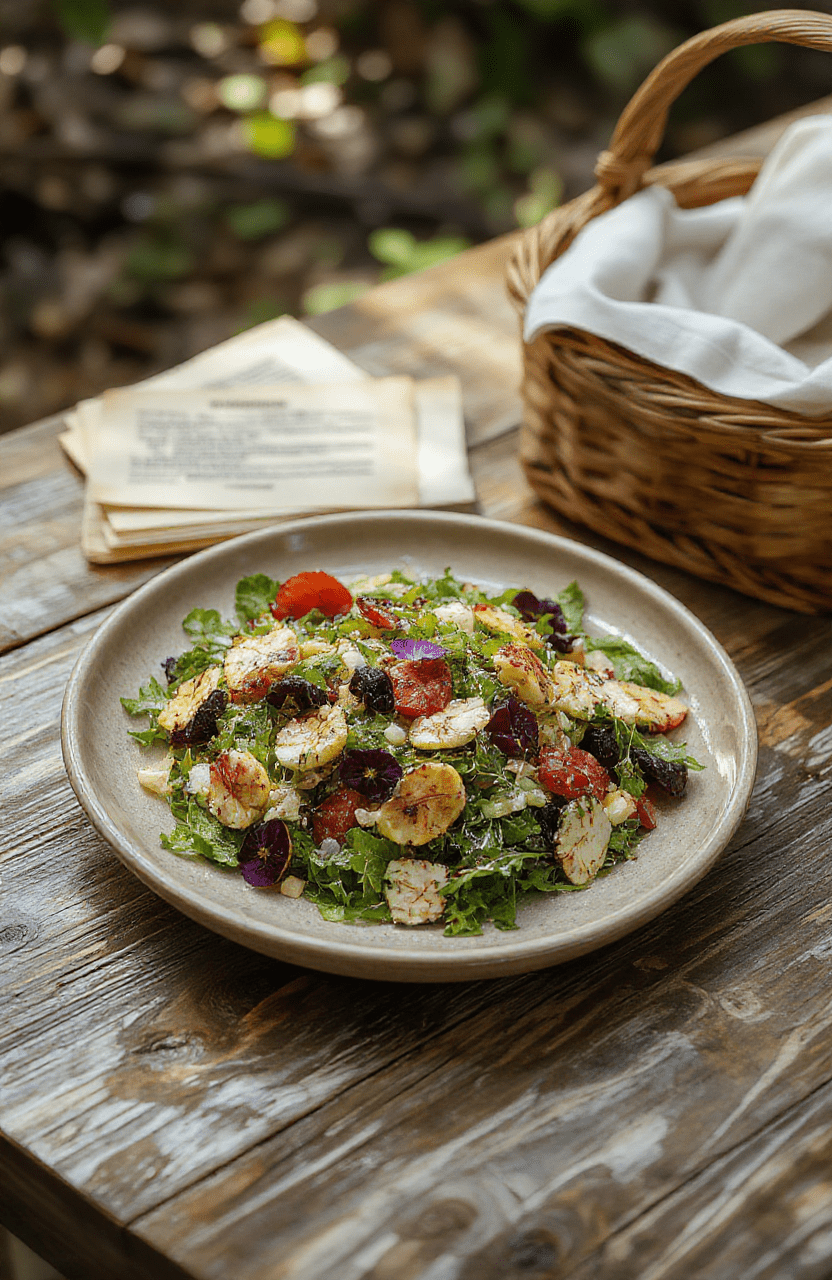
🌸 Shakespeare Midsummer Edible Flower Salad: A Botanical Homage to A Midsummer Night’s Dream 🌿
1. Introduction
Step into Shakespeare’s magical forest with this ethereal Shakespeare salad—a visually stunning, fragrant, and delicately flavored edible flower salad inspired by the whimsy of A Midsummer Night’s Dream. Packed with seasonal greens, edible petals like nasturtium, violets, and calendula, and tossed in a honey-lavender vinaigrette, this dish captures the romance and mystery of the play’s enchanted glade. Whether you’re hosting a literary dinner party, planning a whimsical garden brunch, or simply want to bring a touch of whimsy to your table, this Midsummer Dream salad transforms a humble green bowl into a story told in layers of color, texture, and taste. Bonus: it’s 100% edible art—and easy to make with ingredients you likely already have on hand.
2. Why You’ll Love This Recipe
- ✨ Ready in under 15 minutes—perfect for last-minute guests or spontaneous garden inspiration.
- 🦋 No cooking required, keeping flavors fresh and vibrant.
- 🌿 Garden-to-table elegance with seasonal, pesticide-free flowers and herbs.
- 🍓 Kid- and guest-approved—the visual appeal makes it a centerpiece at every picnic or dinner.
- 🍃 Customizable for dietary needs: vegan-friendly, gluten-free, and easily adaptable for allergies.
- Links seamlessly with other Hollywood-Recipes like the Gladiator Maximus Ancient Grain Salad for a full Roman feast—or pair with the Thor Asgardian Honey Mead Bread for an elfin picnic.
3. Kitchen Tools You Need
While this salad requires minimal prep, having the right tools ensures crisp greens, even slicing, and consistent texture. These hand-picked tools elevate the process (and the results!):
- Fullstar Ultimate Veggie Prep Master for thin, uniform slicing of radishes, heirloom tomatoes, and cucumber—no wobbly cuts!
- Deluxe 33-Piece Silicone Utensil Set for gentle tossing—no metal utensils that bruise delicate petals.
- JoyJolt Airtight Glass Food Storage Set for prepping and storing the vinaigrette or marinated greens ahead of time—ideal for meal prepping.
- Cuisinart 2-Quart Stainless Steel Ice Cream Maker (yes, really!)—use it to chill serving bowls first, keeping your salad refreshingly crisp.
4. Ingredient Notes
The magic of this edible flower salad lives in the quality and variety of ingredients. Not all flowers are safe—or delicious—so we’ve chosen only the most flavorful, visually striking, and palatable blooms:
- Nasturtium leaves & flowers (peppery, bright green & tangerine-orange)—a Shakespeare-era favorite used in salads and medicinal tinctures.
- Calendula petals (mildly tangy, slightly spicy)—often called “poor man’s saffron” and historically used in medicinal salves and stews.
- Violas & pansies (mild, winter-green to sweet)—their flat faces add a gorgeous visual contrast and edible “face” for whimsical plating.
- Chamomile flowers (apple-scented, floral-honey notes)—not just for tea! The tiny daisies infuse subtle aromatic sweetness.
- Edible rose petals (fragrant, slightly tart)—use only organically grown, pesticide-free varieties (cut off white base to avoid bitterness).
- Microgreens or young pea shoots—as a tender, nutrient-dense base to support the more delicate blooms.
- Honey & culinary lavender—for the vinaigrette. Use raw local honey (antibacterial & rich in terroir) and food-grade lavender buds (not floral-scented “lavender” from craft stores!).
⚠️ Important: Never use flowers from florists, roadides, or parks—they’re often treated with systemic pesticides that are unsafe to eat. Grow your own, forage responsibly, or purchase from a trusted organic supplier like Patch N Petals or Edible Flower Farm.
5. How to Make Shakespeare Midsummer Edible Flower Salad
Phase 1: Prep the Greens & Veggies (5 minutes)
Begin by washing and drying your base greens thoroughly in a salad spinner—wet greens dilute the dressing. Tear young romaine or baby arugula into bite-sized pieces. Thinly slice a small heirloom tomato (the colors Pop against the petals!) and julienne a few radishes for peppery crunch.
Phase 2: Make the Honey-Lavender Vinaigrette (3 minutes)
In a small bowl, whisk together:
• 3 tbsp extra-virgin olive oil
• 1 tbsp apple cider vinegar
• 1 tsp raw honey
• ¼ tsp dried culinary lavender (or 1 fresh sprig, crushed)
• Pinch of sea salt & cracked black pepper
Pro tip: Let the dressing rest 5 minutes for the lavender to infuse, then strain if using whole buds.
Phase 3: Arrange & Toss Gently (2 minutes)
In a wide, shallow bowl, layer greens, tomatoes, and radishes. Drizzle with half the dressing—toss with clean hands to coat evenly without bruising. Top with 10–12 whole edible flowers: nasturtiums face-up, violas flipped like tiny faces, calendula petals scattered like confetti. Finish with a light dusting of flaky sea salt and edible gold leaf (optional for regal flair!).
6. Expert Tips for Success
Learning from dozens of test batches, here’s what makes or breaks this Shakespeare salad:
- Cool serves best: Chill your serving bowl in the freezer 10 minutes ahead—cold bowls keep flowers firm and greens crisp.
- Don’t overdress: Edible flowers absorb oil quickly. Add dressing in stages, starting light.
- Dress right before serving: Even 10 minutes ahead can cause petals to wilt (except for nasturtiums—robust little champs!).
- Taste & adjust: Did the honey overpower? A few drops of lemon brighten it. Too tart? A pinch more honey.
- Guests with allergies? Swap honey for agave (vegan), and skip the lavender if sensitive—it’s optional for flavor, not function.
7. Variations & Substitutions
Got dietary needs or seasonal gaps? No problem! This salad is flexible and forgiving:
- Vegan version: Use maple syrup or date syrup instead of honey.
- Spring bloom swap: Use cherry blossoms (seeded & raw-sugar-dusted), Japanese primrose, or blossomed borage (cool cucumber flavor!).
- Low-FODMAP: Skip onion family (e.g., chives). Use garlic-infused oil instead of raw garlic.
- Protein boost: Add whipped goat cheese, toasted sunflower seeds, or crumbled quinoa “croutons” (bake quinoa with olive oil & salt until crisp).
- Herb twist: Stir in 1 tbsp chopped chervil, tarragon, or lemon balm for extra aroma.
- For kids: Turn it into a “flower fairy pasta salad” by adding cooked farro or mini shells and using colorful edible glitter.
8. Storage & Reheating
Storage: Store leftover dressing (without flowers) in a sealed jar for up to 5 days. Undressed salad base (greens + veggies only) keeps refrigerated for 1–2 days—but do not store with flowers. Petals deteriorate rapidly and release moisture, turning the salad soggy.
Reheating: This salad is best served chilled. If greens wilt overnight, refresh them in an ice bath for 2 minutes, spin dry, then re-garnish with fresh blooms.
Fermented twist: For a probiotic boost, add 2 tbsp sauerkraut juice to the dressing (yes, it pairs surprisingly well with lavender!).
9. FAQ
Can I use rosemary instead of lavender in the dressing?
Are all flower petals safe to eat?
No—avoid petals from lilies, daffodils, hyacinth, oleander, and azalea. Stick to trusted edible varieties, and when in doubt, skip it. Your local extension office often offers free ID guides!
What’s the best time of day to harvest edible flowers?
Early morning, after dew evaporates but before the sun peaks. That’s when their essential oils are most concentrated—and their flavor and nutrients most vibrant.
Can I make this ahead for a party?
Absolutely! Prep the greens, sliced veggies, and dressing the night before. Store separately. Add flowers and assemble 20 minutes before serving—guests will love watching you “magically” transform the salad at the table.
10. Conclusion
This Shakespeare salad is more than a recipe—it’s an edible love letter to nature’s artistry and the timeless joy of sharing food. Each ingredient carries centuries of tradition, from Elizabethan apothecaries to modern foodies. Serve it at your next garden gathering, and watch your guests pause, snap photos, and smile. After all, as Puck might say: “Lord, what fools these mortals be…”—when presented with something as beautiful—and delicious—as this.
Ready for more literary feasts? Try the Interview with the Vampire Blood Orange Sorbet for a gothic dessert, or pair this salad with the Samwise Gamgee Roasted Potatoes for Middle-earth magic.
Print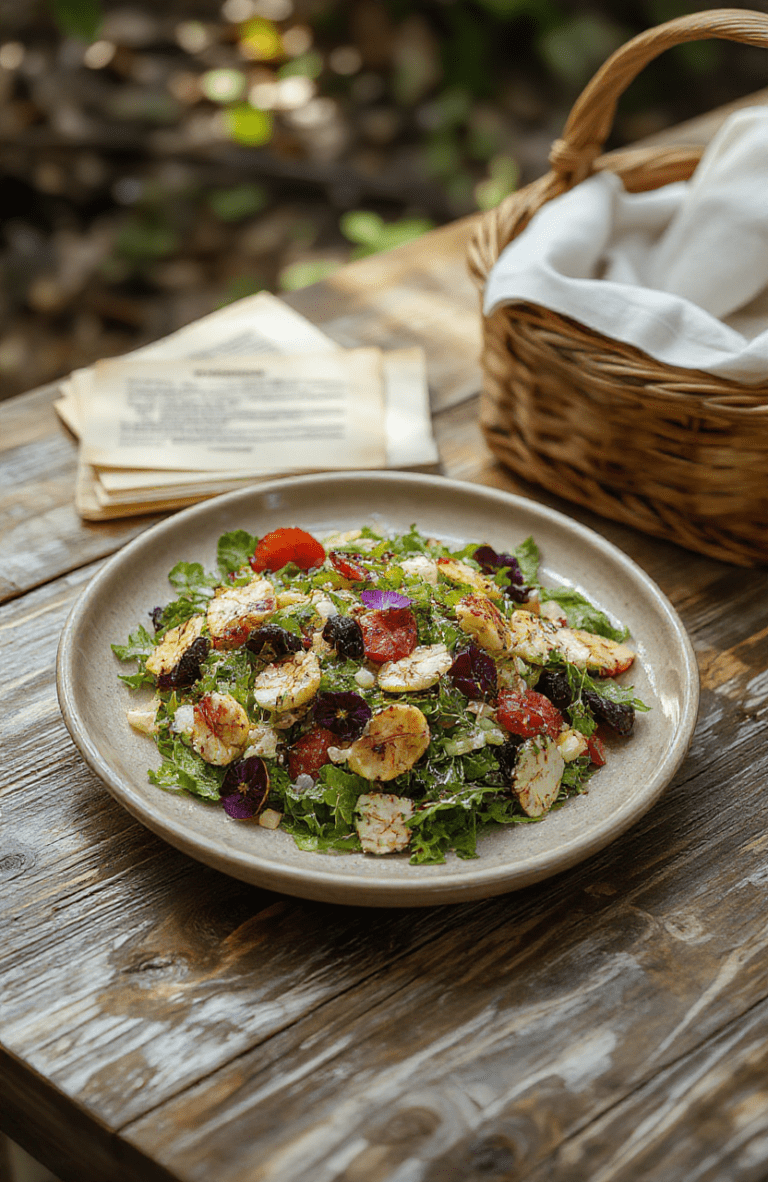
Shakespeare Midsummer Edible Flower Salad
A light, colorful, and fragrant edible flower salad inspired by Shakespeare’s *A Midsummer Night’s Dream*. Features edible petals and blossoms, fresh herbs, and a honey-lavender vinaigrette.
- Total Time: 15 minutes
- Yield: 4 servings
Ingredients
- 2 cups mixed edible flowers (pansies, violas, nasturtiums, borage, calendula)
- 1 cup mixed baby greens (arugula, mizuna, frisée)
- ¼ cup fresh herbs (chervil, chives, mint, lemon balm), finely chopped
- 1 tbsp dried lavender buds (culinary grade)
- 2 tbsp extra-virgin olive oil
- 1 tbsp freshly squeezed lemon juice
- 1 tsp raw honey
- ½ tsp sea salt
- ¼ tsp freshly ground black pepper
- Optional: candied violet petals or edible glitter for decoration
Instructions
- Gently rinse edible flowers and herbs; pat dry with paper towels.
- In a small bowl, whisk together olive oil, lemon juice, honey, salt, and pepper to make the dressing.
- In a large bowl, toss greens and chopped herbs with just enough dressing to lightly coat.
- Arrange the dressed greens on a serving platter or board.
- Sprinkle edible flowers and lavender buds evenly over the top.
- Add optional candied petals or edible glitter just before serving for extra enchantment.
Notes
- Ensure all flowers are 100% edible and grown without pesticides.
- Edible flowers are best used within 1–2 hours of picking for peak color and flavor.
- Remove stamens and bitter white bases from roses and nasturtiums for optimal taste.
- Prep Time: 15 minutes
- Cook Time: 0 minutes
- Method: No-cook
- Cuisine: English Renaissance / Modern Wildcrafted
- Diet: Vegetarian, Vegan (omit honey), Gluten-Free
Nutrition
- Serving Size: 1 cup
- Calories: 45 Kcal
- Sugar: 4g
- Sodium: 110mg
- Fat: 3g
- Saturated Fat: 0.5g
- Unsaturated Fat: 2.2g
- Trans Fat: 0g
- Carbohydrates: 4g
- Fiber: 1.5g
- Protein: 1g
- Cholesterol: 0mg