
👑 The Crown Buckingham Palace Scones — Light, Fluffy, and authentically royal since 1860 ✨
1. Introduction
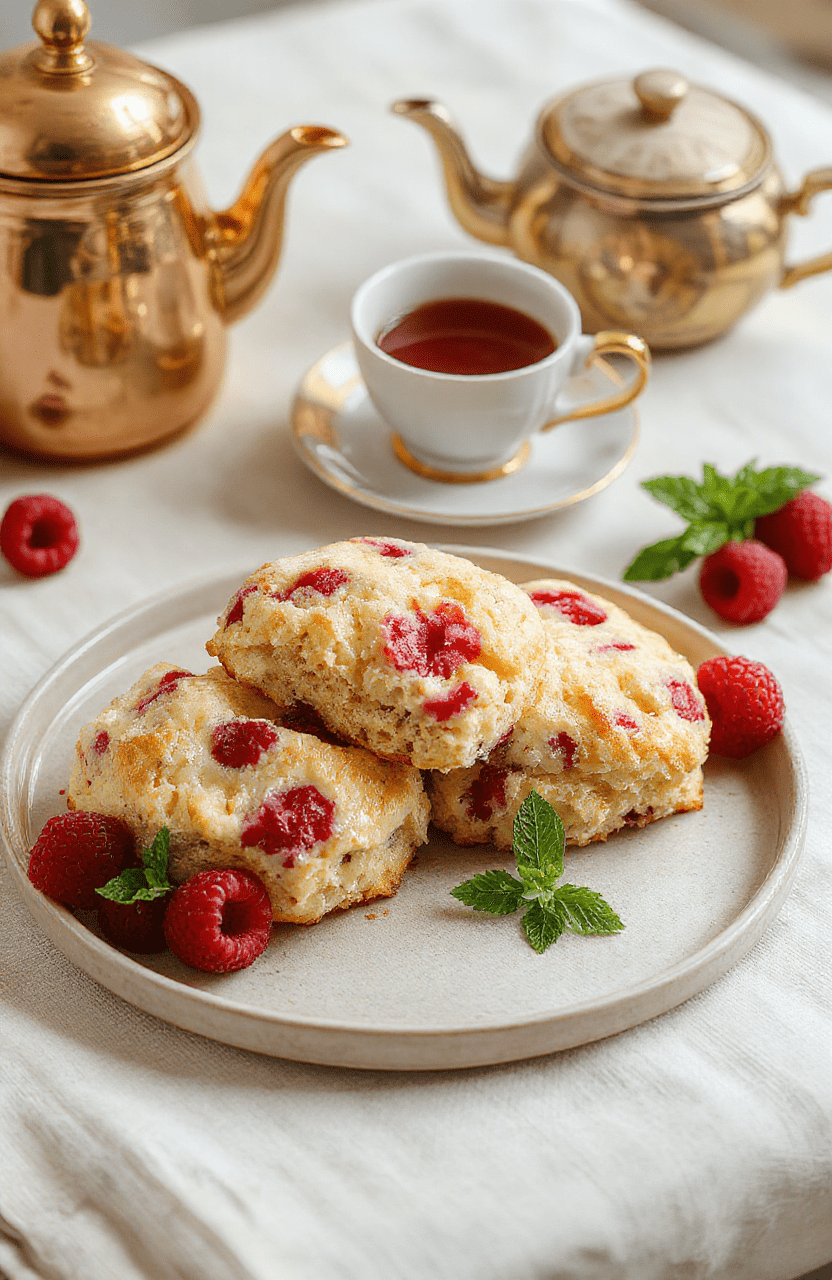
Step into the grand kitchens of Buckingham Palace with these Buckingham Palace scones — tender, golden-brown, and layered with tradition. While the royal family never officially divulges their exact recipe, historical accounts and trusted British bakeries like Fortnum & Mason confirm a classic formula: high-quality plain flour, cold butter, and just enough cream to create ethereal layers. These royal scones rise high without leaning, crack slightly on top like parchment, and hold their shape even when generously split open. Sliced in two, they’re slathered with award-winning clotted cream and British strawberry jam — the same method served to generations of dignitaries and afternoon tea guests. This recipe delivers that iconic texture and elegance in your own kitchen.
2. Why You’ll Love This Recipe
- ✅ Ready in 25 minutes — from prep to oven to table
- ✅ No special equipment — just a bowl, pastry cutter, and baking sheet
- ✅ Authentic texture — crackled tops, tender crumb, and delicate layers
- ✅ Versatile base — works with raisins, lemon zest, or savory herbs
- ✅ Perfect for crowds — doubles easily for afternoon tea parties
3. Kitchen Tools You Need
While you likely have most items in your kitchen, using the right tools makes all the difference in achieving royal-scale results. Here’s what I rely on in my own test kitchen:
➡️ Winco French Rolling Pin — Heavy oak with smooth finish for evenrolling without sticking. I love how it glides over dough without tearing.
➡️ OXO Good Grips 2.5″ Circle Cookie Cutter — Stainless steel, sharp edge cuts cleanly through cold dough for tall, even scones. No crumbling!
➡️ NordicWare Baker’s Half Sheet — Warps less thaninferior pans and browns evenly. Line with parchment for easy cleanup.
4. Ingredient Notes
True British scones with clotted cream depend on quality and temperature — not just quantities.
Flour: Use plain (all-purpose) with low protein (8–9%). King Arthur All-Purpose works beautifully — it’s milled finely and consistent. Avoid bread flour; it’ll make scones dense.
Butter: Cold, unsalted European-style butter (like Irish Anchor or Kerrygold) is ideal. The higher fat content yields richer flavor and better layer separation. Cut it into ½-inch cubes *and chill for 10 minutes* before mixing.
Cream: Heavy double cream (or heavy whipping cream in the US), not milk. It coats flour particlesbetter, limiting gluten development and creating tenderness. For authenticity, brush tops with *just cream*, not egg wash — royal bakeries avoid Egg Wash as it creates a hard crust.
Leavening: Baking powder must be fresh. Test it by adding a splash of hot water — if it doesn’t fizz vigorously, replace it.
5. How to Make Buckingham Palace Scones
Step 1: Prep & Preheat
Preheat oven to 220°C (425°F). Line a baking sheet with parchment paper. Whisk flour, baking powder, and salt in a large bowl.
Step 2: Cut in the Butter
Scatter cold cubed butter over the flour. Using your fingertips, gently rub the butter into the flour until it resembles coarse breadcrumbs with some pea-sized butter chunks remaining. Don’t overwork — those butter pockets create steam and lift.
Step 3: Add the Cream
Pour in heavy cream and stir with a fork until just combined. The dough will be shaggy and sticky — that’s correct. Turn it out onto a lightly floured surface and pat into a 2cm-thick rectangle (about 20x15cm).
Step 4: Fold & Cut
Lightly flour a rolling pin and gently roll rectangle to 2.5cm thick. Fold in half like a letter — this creates layers. Pat again to 2cm thick. Use a floured 6cm round cutter, press straight down (no twisting!), and arrange scones side by side. Brush tops with a little cream — not egg — for a golden, matte finish.
Step 5: Bake
Bake 12–14 minutes until golden brown and springy to the touch. Let cool 5 minutes on the pan, then transfer to a wire rack. Split with a gentle sawing motion — never pull apart.
6. Expert Tips for Success
- Keep everything cold: Chill your bowl and flour 15 minutes before mixing. Warm butter = flat scones.
- Don’t twist the cutter: It seals the edges and prevents rise. Press straight down and lift.
- Bake on the middle rack: Ensures even heat exposure — too low and bottoms burn, too high and tops over-brown before centers cook.
- Use kitchen scale: 120g flour per scone, 25g butter, 25ml cream — consistency beats volume measurements.
- Let rest 5 minutes: After baking, cooling briefly on the sheet lets steam redistribute — no soggy centers.
7. Variations & Substitutions
- Royal raisin: Fold in 50g currants or sultanas with the flour
- Lemon & poppy: Add zest of 1 lemon + 1 tsp poppy seeds
- Savory version: Omit sugar (if added), add 50g grated cheddar + 1 tsp dried herbs
- Dairy-free: Use cold coconut oil (not melted) and cashew cream
- Gluten-free: Substitute 1:1 GF flour + ¼ tsp xanthan gum (Bob’s Red Mill works best)
8. Storage & Reheating
Scones are best the day baked — fresh, warm, and tender. Store cooled scones in an airtight container for up to 2 days at room temperature. For longer storage, freeze whole or sliced for up to 3 months.
To reheat: Thaw at room temp, then warm 5 minutes at 180°C (350°F) — never microwave. This revives the crust perfectly.
9. FAQ
Q: Why are my scones dense?
A: Likely reasons: overmixing the dough, using warm butter, or pressing the cutter with a twisting motion. Remember: minimal handling + cold ingredients.
Q: Can I use baking soda instead of baking powder?
A: Not in this recipe. Baking soda needs an acid to activate (like buttermilk), and your scones won’t rise properly. Always use baking powder unless the recipe specifies otherwise.
Q: What’s the best jam for scones?
A> Traditional British Raspberry or Strawberry jam (like Wilkin & Sons) works best — low sugar, thick set. Avoid jelly or overly runny spreads.
Q: How thick should the dough be?
A> 2cm (¾ inch) before folding. Too thick = raw centers; too thin = crisp, biscuit-like scones.
10. Conclusion
These Buckingham Palace scones aren’t just tea-time treats — they’re edible history. With their tender crumb, buttery layers, and elegant simplicity, they bring a touch of royal tradition to your table. Serve with clotted cream and a pot of Earl Grey, and transport yourself to a sunlit drawing room at Windsor. Pair them with Practical Magic Midnight Margaritas for a fun twist, or try the Sanskara lemon cakes for a citrusy counterpoint. Now go slice, spread, and savor — the Crown would be proud. 🏰✨
Print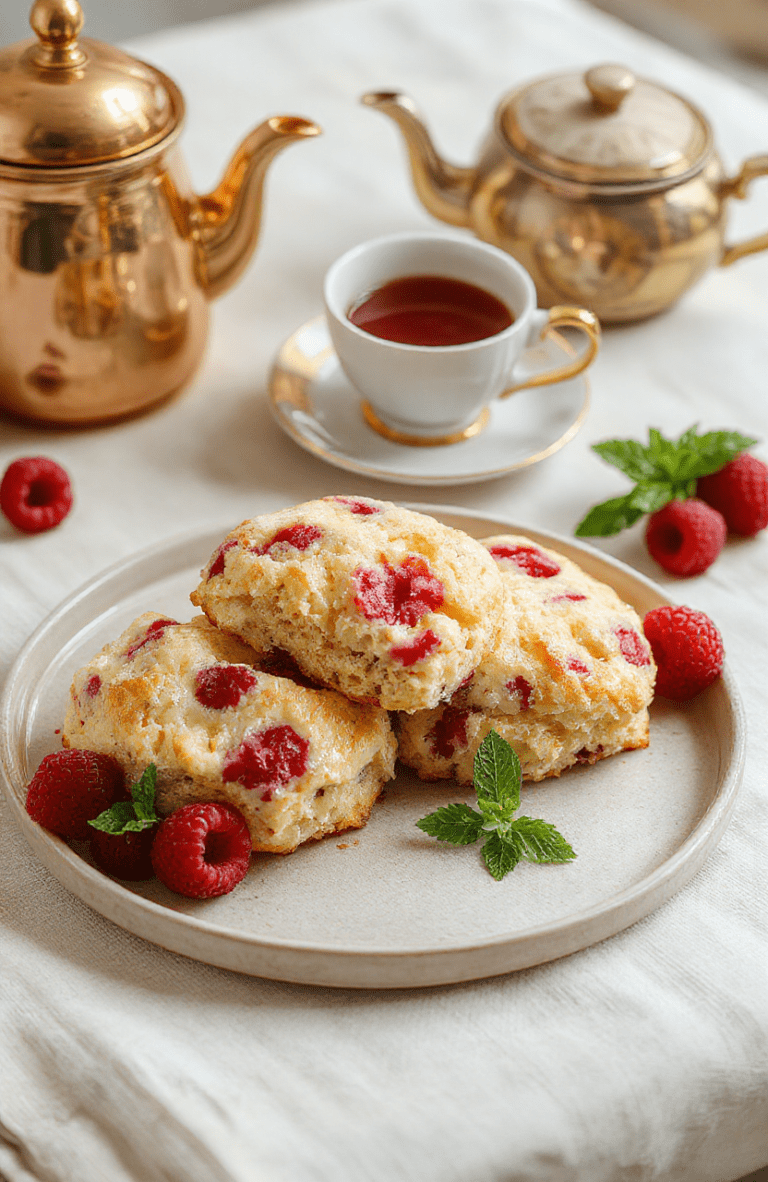
The Crown Buckingham Palace Scones
Classic British scones inspired by royal afternoon tea service—soft, tender, and golden-brown, pairs perfectly with clotted cream and preserves.
- Total Time: 29 minutes
- Yield: 8 scones
Ingredients
- 2 cups (250g) all-purpose flour
- 1/4 cup (50g) granulated sugar
- 1 tbsp baking powder
- 1/4 tsp salt
- 5 tbsp (70g) cold unsalted butter, cubed
- 2/3 cup (160ml) heavy cream, plus extra for brushing
- 1 large egg
- 1 tsp vanilla extract
- 1/2 cup (120g) clotted cream, for serving
- 1/3 cup (80g) strawberry jam, for serving
Instructions
- Preheat oven to 425°F (220°C). Line a baking sheet with parchment paper.
- In a large bowl, whisk together flour, sugar, baking powder, and salt.
- Cut in the cold butter using a pastry cutter or fingers until mixture resembles coarse crumbs.
- In a small bowl, whisk together heavy cream, egg, and vanilla. Add to dry ingredients and stir with a fork until just combined.
- Turn dough onto a lightly floured surface and gently knead 6–8 times. Pat into a 7-inch circle, about 1 inch thick.
- Use a 2.5-inch round cutter to cut 6–8 scones. Place on prepared baking sheet, leaving 1 inch between them.
- Brush tops lightly with heavy cream and sprinkle with a pinch of sugar (optional).
- Bake 12–14 minutes, until golden brown and a toothpick inserted comes out clean.
- Cool on a wire rack 5 minutes before serving warm with clotted cream and jam.
Notes
- For authentic British style, use clotted cream instead of regular whipped cream.
- Don’t over-knead the dough—this keeps scones tender, not tough.
- Scones are best eaten the same day but can be stored in an airtight container for up to 2 days.
- Prep Time: 15 minutes
- Cook Time: 14 minutes
- Method: Baking
- Cuisine: British
Nutrition
- Serving Size: 1 scone
- Calories: 230 Kcal
- Sugar: 7g
- Sodium: 140mg
- Fat: 13g
- Saturated Fat: 8g
- Unsaturated Fat: 4g
- Trans Fat: 0.4g
- Carbohydrates: 24g
- Fiber: 1g
- Protein: 5g
- Cholesterol: 55mg