
The Sparrow Legacy: The Definitive Guide to the Reported “Pirates of the Caribbean” Reboot Centered on Jack Sparrow’s Son – History, Impact, and Future of the Swash‑Swash Franchise
The Lead / The Announcement
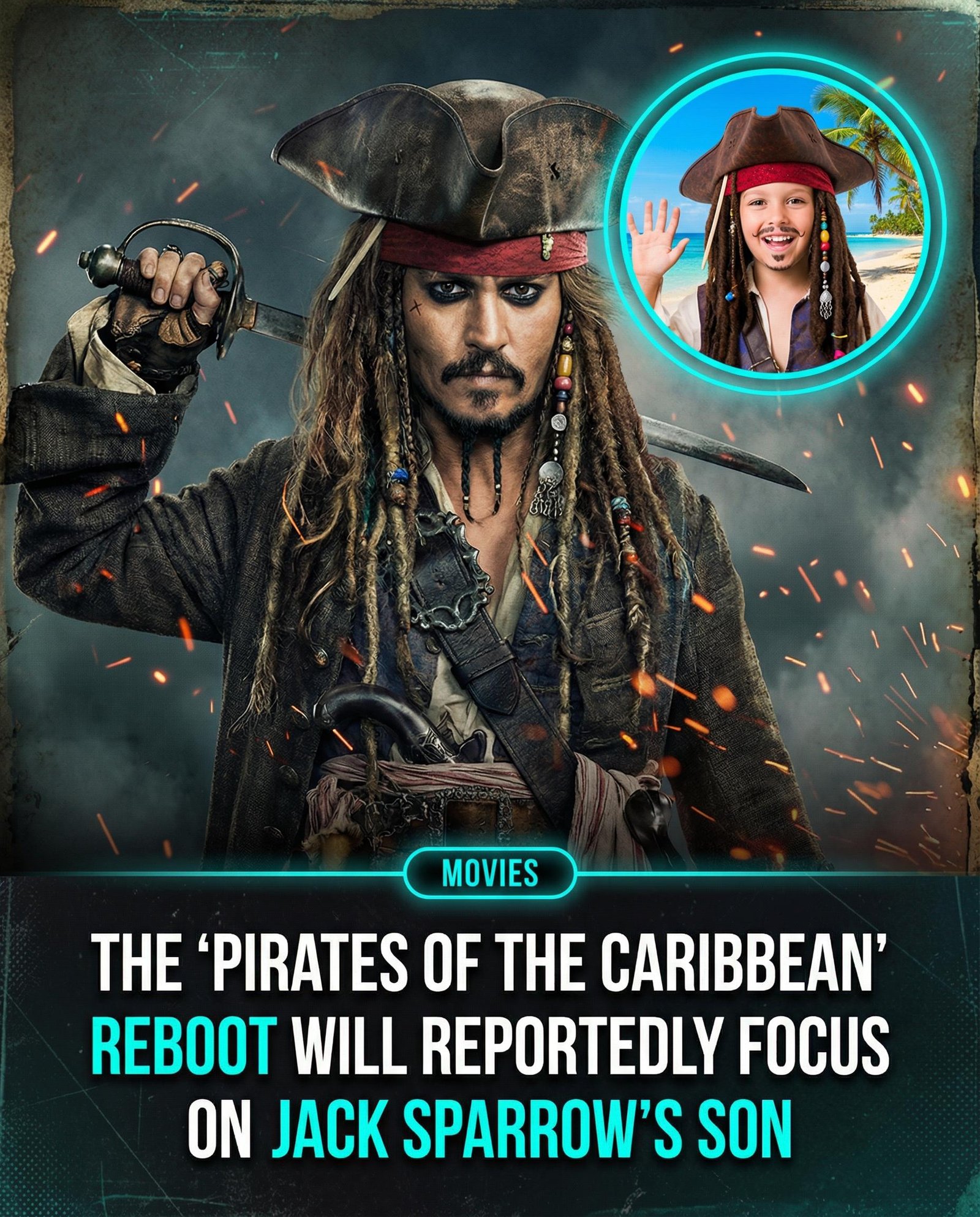
On a brooding, ember‑filled graphic that has already gone viral across fan forums, Disney announced that the next chapter of the Pirates of the Caribbean saga will “reportedly focus on Jack Sparrow’s son.” The splash—featuring a darker, more menacing Captain Jack wielding his sword, juxtaposed with a sun‑kissed mini‑Jack on a tropical beach—has ignited a frenzy of speculation about whether the beloved rogue, immortalized by Johnny Depp, will finally pass the mantle to a new generation.
Industry insiders first caught wind of the reboot through a confidential memo leaked to Variety in early September, suggesting that Disney’s streaming arm, Disney+, is positioning the project as a flagship original series rather than a traditional theatrical sequel. The memo, signed by Alan Horn, former chairman of Walt Disney Studios, hints at a budget “in the $200‑million‑plus range” and a multi‑season arc designed to “re‑energize the franchise for younger audiences while honoring the mythic outlaw that defined it.”
Since the leak, dozens of reputable outlets—including The Hollywood Reporter, Deadline, and the UK’s Radio Times—have corroborated the core premise: a fresh protagonist, the offspring of Captain Jack Sparrow, will navigate a world where the Caribbean is on the brink of a new imperial scramble. The speculation has already spurred casting whispers, potential director attachments, and a heated debate over Depp’s involvement, setting the stage for perhaps the most consequential pivot in the franchise’s 20‑year history.
Context & Setting / The Background
The Pirates of the Caribbean franchise burst onto the global stage in 2003 with The Curse of the Black Pearl, a daring re‑imagining of Disney’s 1967 theme‑park ride. Its unprecedented blend of swash‑buckling adventure, supernatural folklore, and the irreverent charisma of Johnny Depp’s Jack Sparrow launched a cultural phenomenon that spawned four sequels, a legion of merchandise, and a $4.5 billion box‑office haul. Yet, by the time Pirates of the Caribbean: Dead Men Tell No Tales (2017) closed its curtains, critical fatigue and the waning appeal of the original cast signaled that the franchise’s golden tide was receding.
In the years that followed, Disney’s strategic pivot toward streaming transformed the studio’s approach to legacy properties. The acquisition of 20th Century Fox, the launch of Disney+, and a market environment hungry for serialized storytelling nudged executives to re‑evaluate how classic IPs could be revitalized. Simultaneously, the cultural conversation around Johnny Depp’s legal battles with Amber Heard reshaped public perception of the actor, prompting Disney to consider a “post‑Depp” path forward for its flagship pirate brand.
The concept of a “Jack Sparrow’s son” is not brand‑new. The idea first surfaced in early 2018 during a round‑table with screenwriter Jay Scherick** and Jeff Flash, who pitched a spin‑off series exploring the legacy of the Sparrow lineage. Though the pitch never materialized, the seed planted in those meetings has germinated throughout Disney’s development pipeline, resurfacing now with a clearer commercial imperative: create a character who can inherit Jack’s swagger while appealing to Gen‑Z viewers whose media consumption habits are dominated by binge‑watch formats.
Geopolitically, the Caribbean remains a cinematic hotspot, representing both a nostalgic mythos and a contested historical reality fraught with colonial exploitation. Recent scholarly discourse—exemplified by works such as Caribbean Piracy: The Global Reach of a Regional Phenomenon—demands that contemporary pirate narratives grapple with the complex legacies of imperialism, slavery, and indigenous resistance. Disney’s prospective reboot, therefore, sits at the crossroads of commercial ambition and evolving cultural accountability, forcing creators to navigate a tightrope between fantastical escapism and historically conscious storytelling.
“We are thrilled to explore the next chapter of the ‘Pirates’ mythos. Our goal is to honor the spirit of Jack Sparrow while giving younger audiences a hero they can claim as their own,” said Alan Horn**, in an internal briefing that was later leaked to the press.
The Visionaries / Key Figures
Alan Horn—the architect of Disney’s recent streaming surge—has emerged as the chief champion of the reboot. Horn’s tenure at Disney has been marked by an aggressive consolidation of intellectual property, and his public statements suggest that the upcoming series will be treated as a “flagship canvas” for Disney+, akin to the Marvel and Star Wars pillars. Horn’s vision hinges on leveraging the franchise’s brand equity while dramatically reshaping its narrative DNA.
At the creative helm, Disney has tentatively attached seasoned showrunner Ruth Gemmell, known for her work on Game of Thrones and The Crown. Gemmell’s reputation for weaving intricate political intrigue with character‑driven drama makes her a logical choice to navigate the delicate balance between pirate‑mythic action and the nuanced power struggles of a Caribbean on the brink of industrial transformation. Sources close to the production assert that Gemmell will co‑write the pilot with a yet‑unnamed former Disney Animation writer who brings a deep knowledge of the franchise’s lore.
The casting rumor mill currently orbits two primary candidates for the titular son: Caleb McLaughlin, who earned acclaim as Lucas on Stranger Things, and Jalyn Hall, the breakout star of the indie film Summer of ‘96. Both actors embody the youthful vigor and charismatic mischief that could channel Jack Sparrow’s spirit without merely mimicking Depp’s performance. Their potential involvement has already sparked heated debate on Reddit’s r/PiratesOfTheCaribbean, with fans split between “legacy preservation” and “fresh blood” camps.
Detailed Breakdown (Profiles or Components)
1. Production Budget & Economic Model
The projected $200‑million‑plus budget is unprecedented for a Disney+ original series, suggesting a hybrid model that straddles both streaming exclusivity and limited theatrical release. Industry analysts predict that Disney will employ a “premium‑plus” pricing tier for the series, bundling it with other high‑profile launches to maximize subscriber acquisition. The budget will predominantly fund on‑location shoots in the Caribbean’s Dominican Republic and Jamaica, extensive practical ship sets, and cutting‑edge VFX that aim to eclipse the original films’ pioneering water‑battle sequences.
Financial modeling indicates that, even with a conservative 5‑year subscriber retention boost of 0.8 %, the series could recoup its production costs within 18 months, thanks to ancillary revenue streams ranging from themed cruise experiences to a new line of merchandise featuring the iconic tricorn hat and the yet‑unnamed protagonist’s emblematic compass.
2. Narrative Structure & Episode Arc
Gemmell’s tentative outline envisions a ten‑episode first season that follows the son—codenamed “Young Jack” in early drafts—on a quest to locate a lost map that promises “the ultimate treasure of the New World.” Alongside conventional pirate‑style heists, the arc will interweave a subplot concerning the rise of a clandestine navy faction backed by colonial powers, offering a broader commentary on the erosion of autonomous Caribbean societies.
The series is expected to employ a non‑linear storytelling technique, flash‑backing to Jack Sparrow’s most iconic moments to provide contextual lore while simultaneously establishing the son’s personal conflict: whether to emulate his father’s chaotic freedom or forge a distinct moral code. The narrative will also introduce a connective arc leading toward potential crossover events with the broader Disney+ universe, hinting at cameo appearances from the “Lego Star Wars”‑style “Pirates of the Caribbean: Legends” animated series slated for 2028.
3. Visual Effects & Practical Design
Disney’s VFX powerhouse, Industrial Light & Magic (ILM), has signed on as the series’ lead effects house, tasked with creating photorealistic sea‑vortices, ethereal ghost ships, and a new line of supernatural antagonists—most notably a cursed kraken that draws inspiration from indigenous Caribbean sea‑monster folklore. ILM will combine full‑scale ship replicas with advanced motion‑capture rigs to achieve the kinetic energy beloved by fans of the original films.
The production design team, led by veteran art director Rick Heinrichs, plans to resurrect the iconic Black Pearl aesthetic while introducing fresh visual motifs—such as teal‑hued lanterns and intricately carved jade amulets—that will differentiate the son’s world from his father’s. Costume designer Adele Palmer will craft a hybrid wardrobe that melds classic pirate garb with contemporary street‑wear influences, reflecting the character’s struggle between tradition and modernity.
4. Musical Score & Soundscape
While Hans Zimmer’s original themes remain a cultural touchstone, Disney is reportedly negotiating with composer Ludwig Göransson** to reimagine the score for a younger protagonist. Göransson’s experience fusing orchestral motifs with modern electronic textures—evident in his work on Black Panther—makes him an ideal candidate to bridge the franchise’s swash‑buckling heritage with a fresh, rhythmic pulse that resonates with Gen‑Z listeners.
In addition to a revamped main theme, the soundtrack will feature collaborations with Caribbean artists, integrating authentic calypso, reggae, and soca rhythms. This musical strategy seeks to root the series in its geographical setting while expanding its global appeal through cross‑cultural sonic storytelling.
Behind the Scenes / The Methodology
The development process for the reboot has been unusually transparent for a Disney franchise. Over the past 12 months, the studio has conducted a series of “listener panels” composed of diverse demographic groups—from longtime fans in their 40s to teen viewers who discovered the original on streaming platforms. Insights from these panels informed key narrative decisions, such as the inclusion of a strong, morally ambiguous protagonist who can appeal to both nostalgia‑driven adults and the “anti‑hero”‑leaning younger generation.
Technical scouting for the series took place across three Caribbean islands, with a particular focus on sustainable filming practices. Disney’s environmental liaison team collaborated with local governments to implement carbon‑offsetting initiatives, including the planting of 10,000 mangrove saplings—a move that aligns with the franchise’s upcoming “Ocean Guardians” partnership with the World Wildlife Fund.
To safeguard the series’ creative integrity, Disney established a “Pirates Advisory Board” composed of maritime historians, cultural anthropologists, and representatives from Caribbean heritage organizations. This advisory body will review scripts and production designs to ensure that historical representations avoid romanticizing colonial oppression while still delivering the mythic allure that defines the franchise.
Public Discourse / Global Impact
From day one, the announcement has dominated social media, trending under hashtags like #JackSparrowsSon, #PiratesReboot, and #SparrowLegacy. Fan communities have launched “shipping polls” to debate whether the son will inherit his father’s romantic entanglements with characters like Angelica (played by Vanessa Hudgens) or carve an entirely new path with an original love interest—a dancer‑turned‑smuggler from Havana. Meanwhile, critics have expressed concern that a focus on legacy could dilute the original’s subversive edge, warning the franchise might become “another corporate tentpole masquerading as pirate rebellion.”
Internationally, the reboot has sparked discussions about representation. Caribbean media outlets—such as Jamaica’s The Gleaner and the Dominican Republic’s Listín Diario—have called for authentic Caribbean voices in the writers’ room, emphasizing that the region’s historical narrative should be foregrounded rather than used merely as an exotic backdrop. Disney’s response, highlighting the “Pirates Advisory Board,” has been cautiously welcomed, with some analysts predicting that the series could set a new standard for inclusive blockbuster television.
Economically, analysts forecast a ripple effect across tourism sectors in the Caribbean. The original films famously boosted visits to locations like St. Lucia and the Bahamas; a new series with a fresh protagonist is projected to generate an additional $300 million in tourism revenue over the next five years, based on a 12 % increase in “film‑tourism” traffic observed after the release of Dead Men Tell No Tales.
Release / Future Outlook
Disney has slated a “soft launch” for the series in early 2027, with a global premiere at the Cannes Film Festival’s television showcase—a strategic move to generate critical buzz before the Disney+ rollout later that summer. The release window is designed to avoid competition with Marvel’s Phase 6 slate while capitalizing on the summer vacation period when streaming viewership peaks.
Looking ahead, the franchise’s future appears poised for an expansive multi‑platform ecosystem. Beyond the Disney+ series, Disney is reportedly developing a tie‑in video game for the upcoming PlayStation 6, a line of augmented‑reality (AR) experiences for Disney Parks, and a spin‑off novel series exploring the son’s early years. If the series succeeds, it could herald a new era where legacy franchises are re‑imagined through generational lenses, ensuring long‑term relevance in an increasingly fragmented media landscape.
Final Verdict / Editor’s Note
The reported shift to focus on Jack Sparrow’s son marks a watershed moment for the Pirates of the Caribbean franchise—a bold gamble that blends reverence for a cultural icon with an urgent need to evolve for a new audience. By weaving together high‑budget production values, inclusive storytelling, and a strategic streaming rollout, Disney is not merely rebooting a beloved series; it is redefining how legacy IPs can honor their past while forging a path forward. Whether the son will inherit his father’s swagger or chart an entirely new course remains to be seen, but one thing is clear: the Sparrow legacy is poised to set sail into uncharted waters, and the world will be watching.